• When I came home on valentines day these were waiting for me on the bedside table :)

    Of course before they died I had to put a few away for jewellery. I preserved them and finally had a chance to make something of them this week.

    Tulip Jewellery

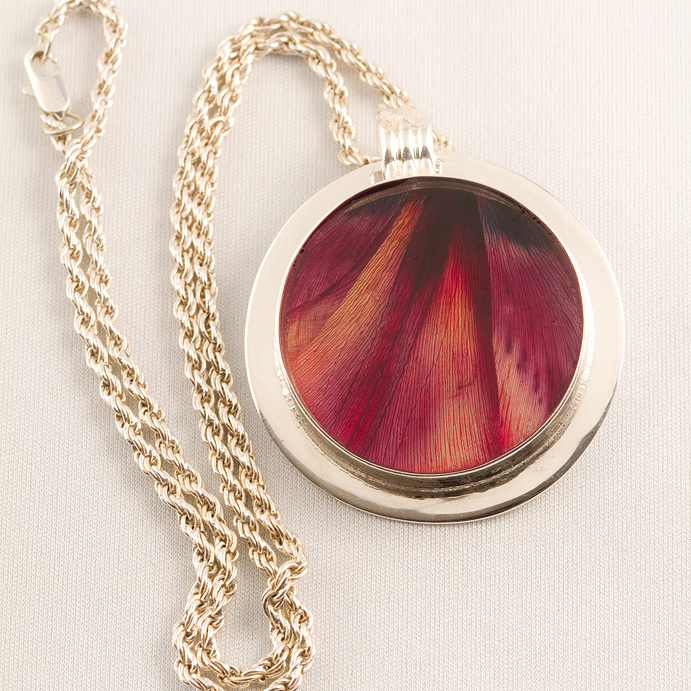
    This is a 2 inch wide silver plated bezel on a white gold chain. The tulip petals are preserved perfectly inside using jeweller’s grade resin. Can anyone guess what book I’m using as a background? Here’s a hint: ‘Take me with you, for laughs, for luck, for the unknown. Take me with you’.
    Tulip Jewellery

    I love how vibrant the colours in the tulips stayed. After I had preserved them they had an almost metallic sheen to them. The texture is just gorgeous.

    tulip jewellery

    I also did silver plated cuff-style bracelets. The bezel in this case is 21mm square x 5mm deep. The centre of the tulip was used for this; they had deep purple centres that retained their colours beautifully!

    tulip jewellery

    This front-on view shows the pattern well. I arrange my compositions before I preserve them, so there is a minimum of fussing with the afterwards. The pieces are very delicate, more so than with preserved leaves.

    tulip jewellery

    The piece of pottery I’m shooting on is a piece by Phillis McCulloch from Clay Design here in Toronto. She is an extremely experienced and talented potter :) This piece is a 21mm square bezel ring, also silver plated. I love the variety of colours and tones in this one.
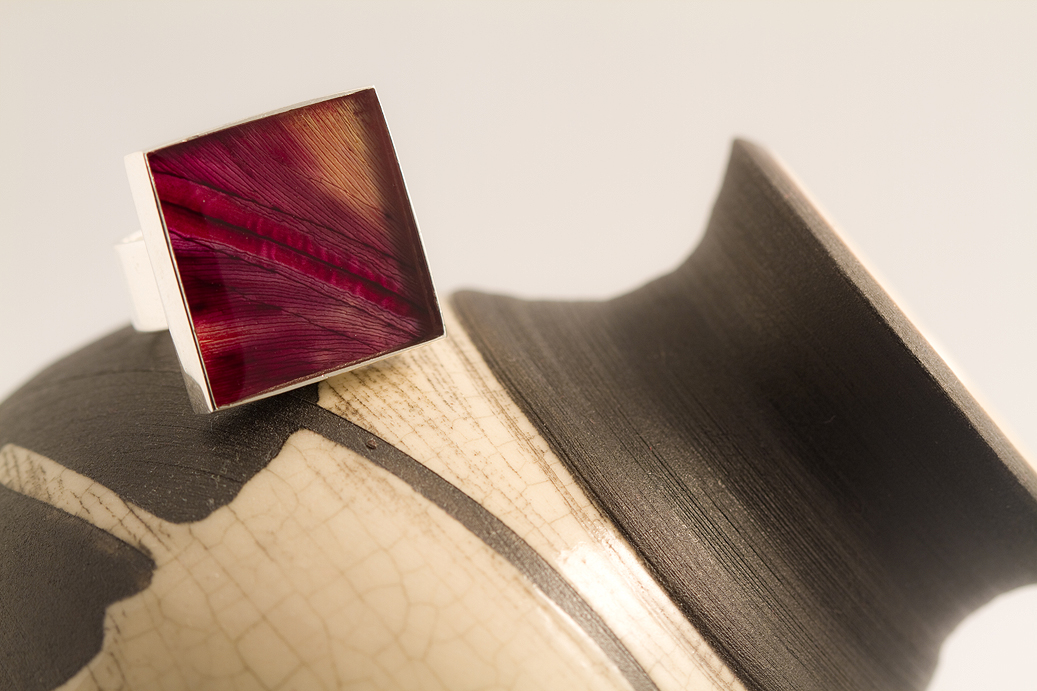
    tulip jewellery

    I also did 1 round piece – this one is 21mm in diameter. The shape is lovely, though I confess I’m partial to the square designs.
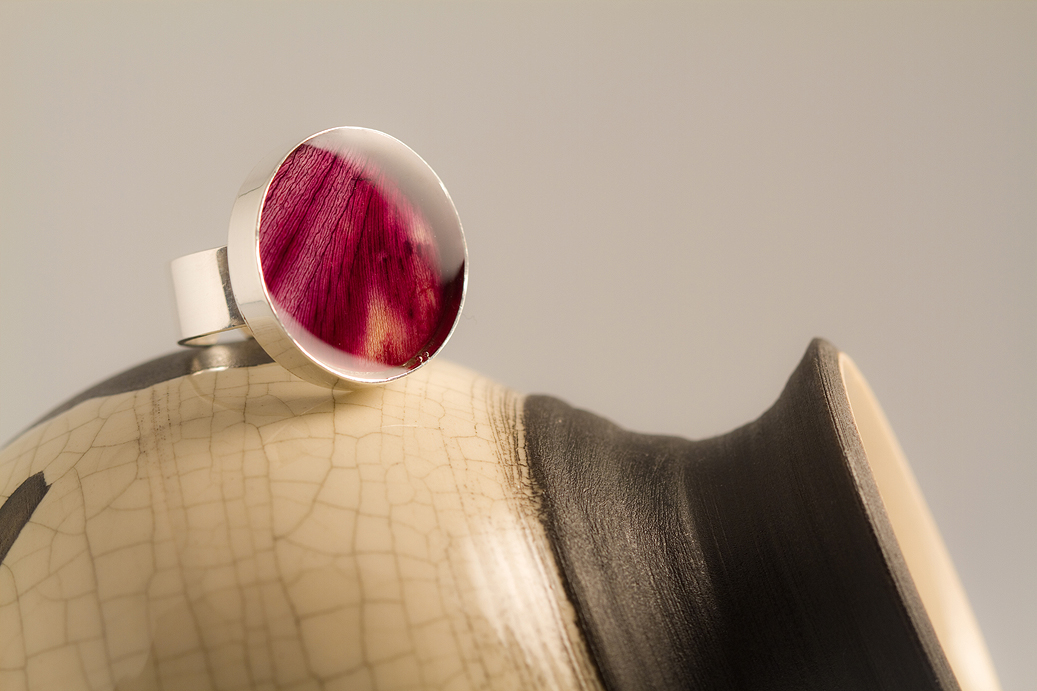
    tulip jewellery

    Sometimes you just hit a sweet spot – I’m really happy with how this round of jewellery turned out and sorry that I only made 4 pieces. I kept over some of the tulips, a light pink series that I’ll be starting this weekend. I’ll be aiming for more necklaces this time as well. Stay tuned :)

  • Today it’s snowing outside. It’s practically March, but it’s as good a day as any for snow to finally show up. With any luck it will cool down and become proper snow – currently it would be more accurate if I said it was slushing from the sky ;)

    Leslie Street Spit

    Winter loveliness brings to mind a trip Tito and I took to the Leslie street spit 2 years ago – before the birth of this blog. Because the spit acts as a breaker on the east side, and because that winter was very cold, the entire beach was frosted in ice.

    Leslie Street Spit

    The Leslie Street Spit (technically Tommy Thompson Park) is a long spit made from construction refuse that extends out into Lake Ontario. It began as the place where material was dumped during the excavation of the Yonge Street subway line.

    Leslie Street Spit

    The beautiful thing is that nature reclaimed the park. It’s an interesting contrast – there are now parts that are still used for dumping and parts that are protected as an important stopover for migratory birds.

    Leslie Street Spit

    Because it began as a construction dumping ground, the personality of the spit is varied and ever changing. One beach is a graveyard for telephone poles. One is the final resting place for innumerable bank safes. One entire beach contains the remains of a building that had fluted and carved columns, you could almost pretend you were at the ruins of some ancient site.

    Leslie Street Spit

    There are gardens of rebar, a bird banding station, a lighthouse and a shipwreck. In the summer it teems with a wide variety of wildlife, and it’s a macro photographers dream.

    Leslie Street Spit

    There’s an entire part of the forest that’s been taken over by cormorants.

    Leslie Street Spit

    It’s the site of our annual first bike ride of the season. We’re always freezing by the time we get home :) Tito and I have shot it year-round, but days like this can still leave us in awe of what a beautiful spot the Leslie Street Spit is.

    Leslie Street Spit


  • I didn’t know if the idea would have any traction, but it’s only been up for a day and I’ve heard back several beautiful stories so far. One from a lady who helped out someone at work because they had the same rare blood type, one from a person who rescued a one-eyed stray kitty, even a lady who helped avert a suicide through the simple act of letting a stranger use her phone. There were sweet, small stories too, someone who cleaned up after a windstorm upended all the trash cans at her work, someone who bought a candy bar for a tired cashier and someone who helped a man in a wheelchair cross the street. The stories are sweet and cute and I love reading them ! Keep them coming, it’s been such a special treat for me to get these lovely emails and I can’t wait to share them with everyone.

    The one about the person who averted a suicide was the first one I received and it was an especially meaningful one to me; it shows that the consequence of the smallest action can be more profound than we would ever imagine.

    Click here if you’re interested in joining the movement!

  • 2 of my best friends are getting married – she’s from Sri Lanka, he’s Portugese. They both love Super Mario. Nailed it?

    Super Mario Cake Topper

    I wish I had some advice on how I made these, but I honestly just opened up a pic of Mario and Princess and winged it bit by bit.

    Super Mario Cake Topper

    This was for their engagement party this past weekend ;) They loved them!

    Super Mario Cake Topper


  • Inspired by the good works of the Yarn Harlot and other knitters who have used patterns to raise funds for charity I’ve decided to try an idea of my own for knitting karma! Here’s how it works. This is a lovely cowl pattern I’ve just developed:

    Put a little love out

    It’s a beautiful and stylin’ one-skein project. I used less than 200 yards of worsted weight yarn (Misty Alpaca’s Tonos Worsted in this case) for this snuggly cowl.

    Matching bands of moss stitch frame a soft cowl that’s knitted flat and seamed to create a vertical tube for the lacing, which you can use to cinch the piece on one side for a very stylish look.

    Put a little love out

    It’s suitable for folks who are just learning; you only need to be able to knit, purl and seam. For more advanced knitters it’s a fun and mindless project that you can whip off in an evening or two. The simple pattern is perfect for showing off variegated yarns or knitting in a solid colour.

    Put a little love out

    Enough about the cowl – how do you get the pattern? Have you ever been to a party where they throw a beach ball in the crowd and everyone has to help keep the beach ball in the air? I’m trying to create a karmic beach ball that we can all help keep in the air. So if you love the pattern and want a pdf it’s completely free – here’s how you get it:

    I already know that you’re a wonderful person. I’m sure of it. Write me an email (hello@thebluebrick.ca) and tell me something nice that you did. It can be giving up your seat on the train, smiling at someone who looks like they needed it, or buying a coffee for someone who’s cold. Nothing huge, just do something wonderful and do it with love in your heart. Write and tell me about it and I’ll send you the pdf.

    Put a little love out

    It’s my dream to have a blog posting in a month or two where I share your beautiful stories (without names) and hopefully combine them with photos of your beautiful finished cowls for a feel-good blog post about how we put a little more love in the world through sharing this dialogue, and pattern together.

    I hope very much that I will hear from lots of you beautiful people in the weeks ahead :) So go out there and be your wonderful selves :) A very special thank you to the first person to show this project some love; the beautiful Jeanette who posed for these photos :)
  • Today I wanted to talk a little about product photography and how I get even lighting on my shots. For an example I’ll use a piece of pottery.

    product photography tutorial

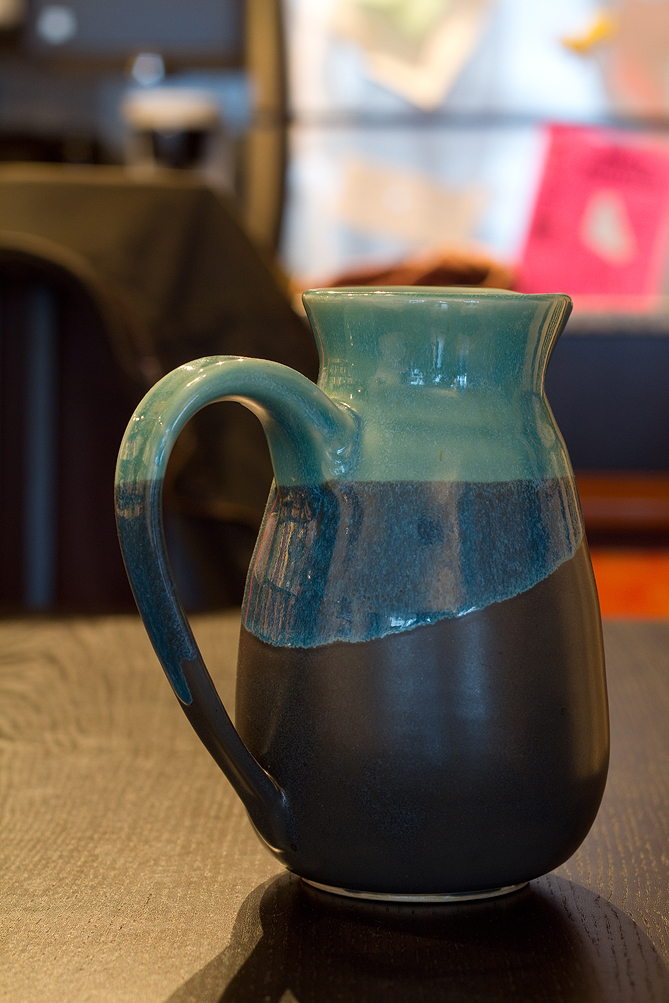
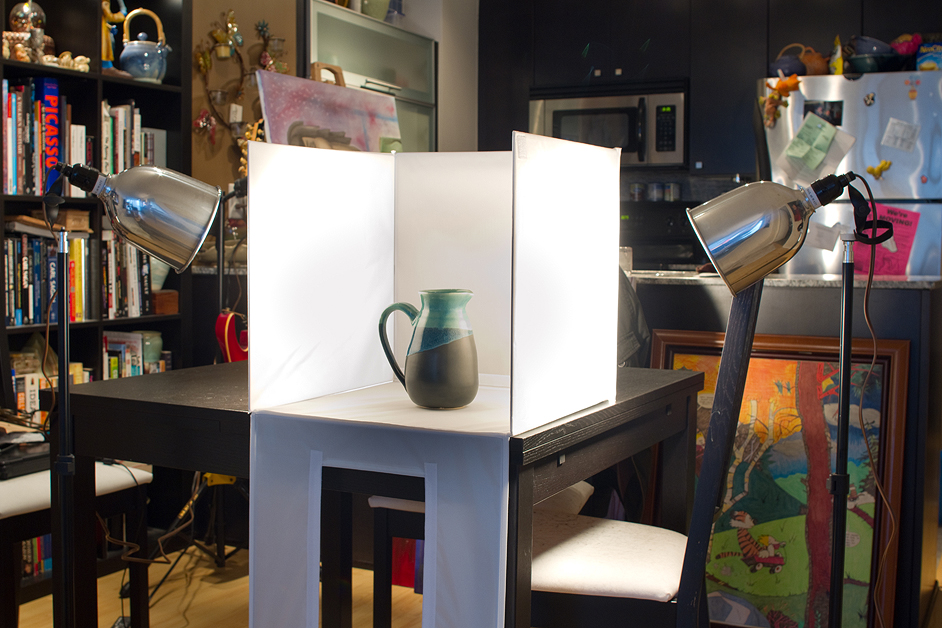
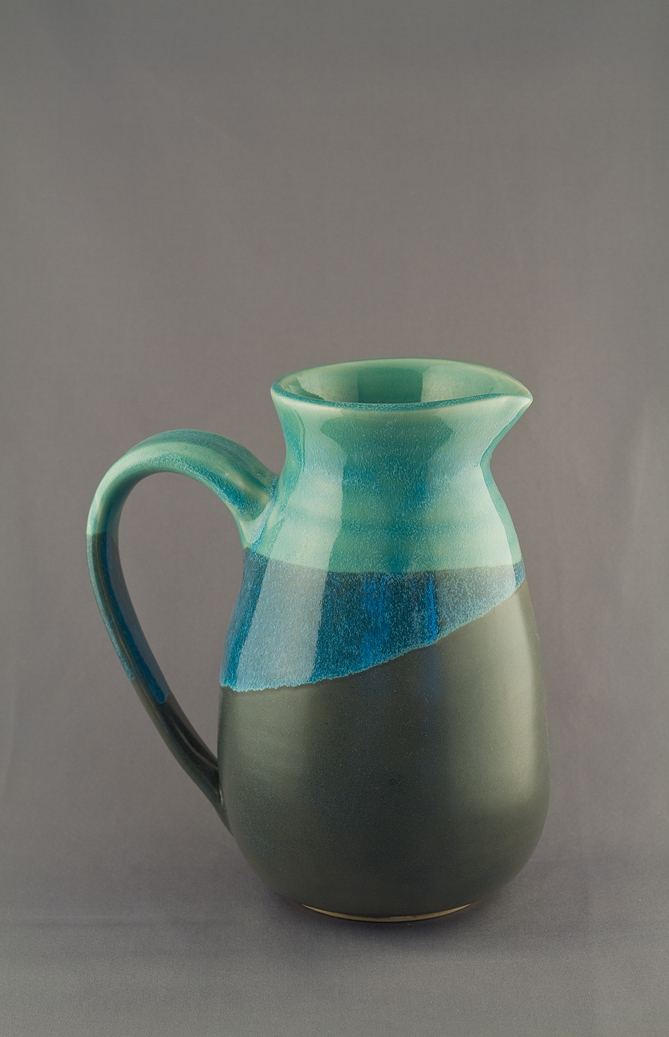
    Here is a photo of one of my pitchers. Pottery is very hard to shoot because it’s shiny & colourful. Any picture of my pottery doesn’t do it justice if there are sharp, bright highlights and the colours can’t shine. So first I fix the lighting issue by aiming 2 stand lamps at it.

    Starting to look better but there are 3 huge problems with it.

    1. The background is distracting
    2. The shadow of the handle is harsh
    3. The highlights are too sharp and bright

    Now I add the lightbox, to soften up the light and neutralize the background. My set up now looks like this.

    product photography tutorial

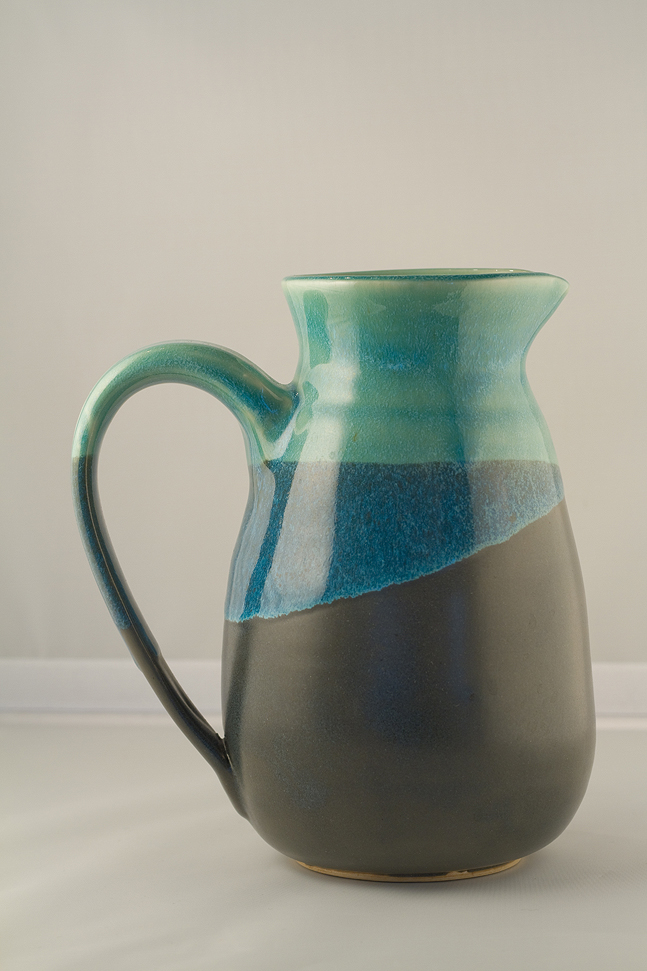
    The result is a shot that looks like this:

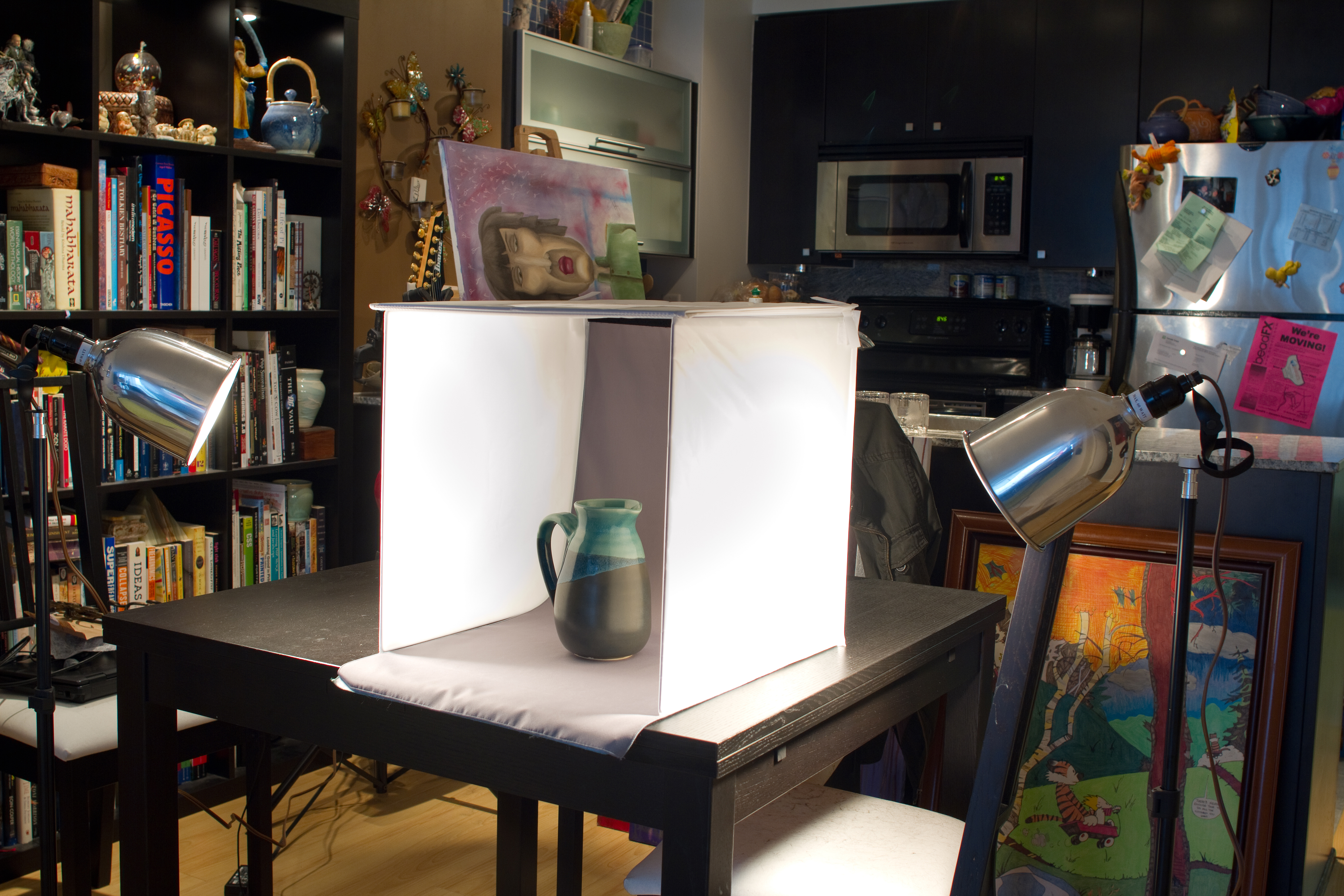
    Definitely looking better! Now, the background is still not neutral enough for me so I’m going to insert a sheet of neutral grey fabric that will drape over the top of my lightbox and over the edge of the table. Then I place my pottery on the fabric, and my set up now looks like this:

    product photography tutorial

    Taking a shot gives me this:

    product photography tutorial

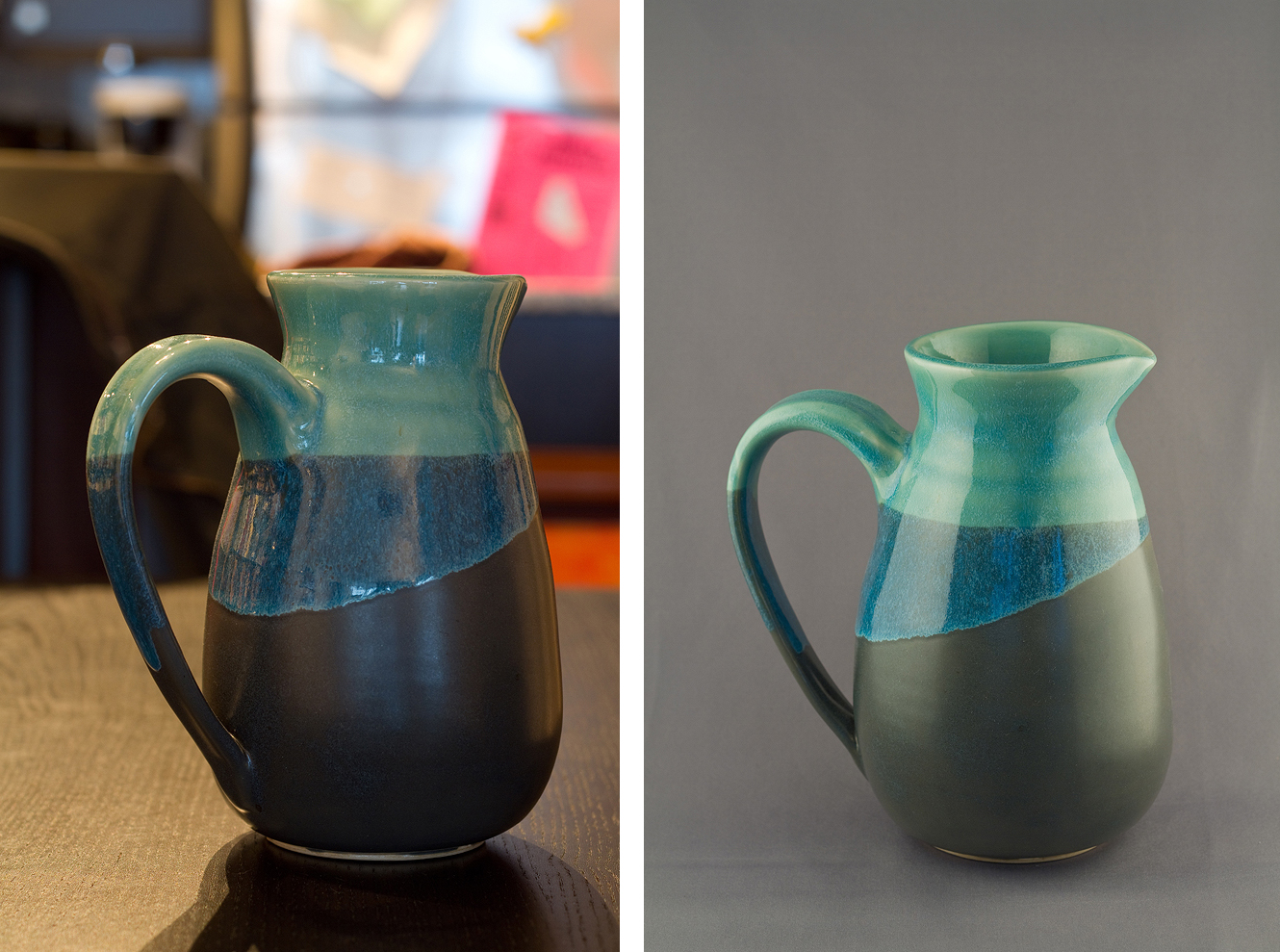
    Perfect! And that’s how you use a lightbox to improve your product photography. Here is a before and after.

    product photography tutorial

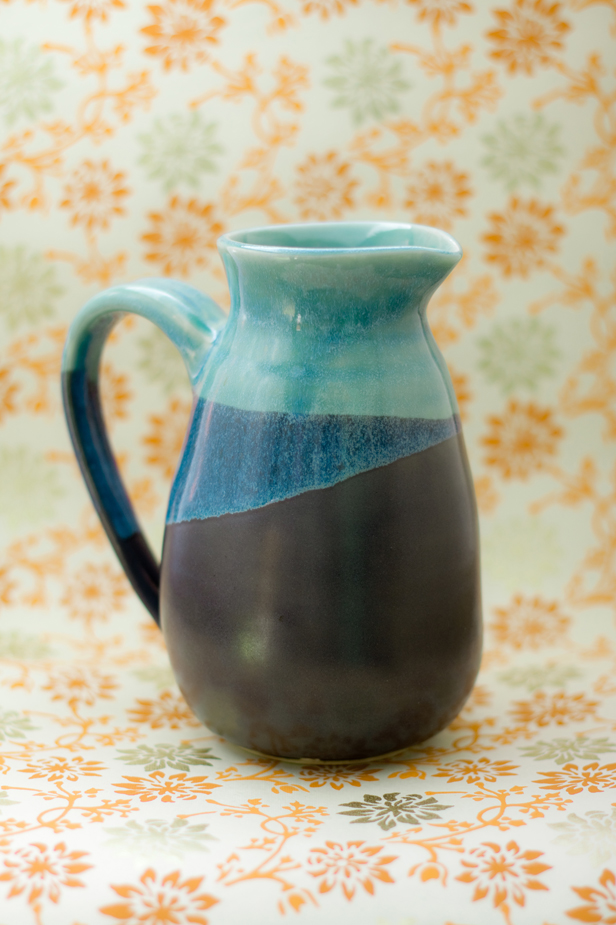
    You can get really creative from here and start adding different fabrics and papers into the background:

    product photography tutorial

    I’ve used this technique on the cheap too – you don’t need expensive equipment to start with. Here is my first ever set up:

    product photography tutorial

    I’m using a cardboard box with the sides and top cut out. Over the cut outs I’ve taped on some of that stuff that your electronics come packaged in, but you can use tracing paper or crepe paper. The sides are reinforced with packing tape. To light it, I’m using my livingroom window on one side, and an ikea stand lamp on the other side, the results were still lovely:

    product photography tutorial

    And that’s it! If you’re new to lightboxes and you decide to try them out I’d love to see a shot, and remember – you can get started without having to buy anything up front!

  • This is the winter that wasn’t. At least, here in TO it wasn’t. We’re not used to this total lack of winter and last weekend Tito and I drove out in search of ice and snow because, dammit, we miss it. We ended up heading north into Parry Sound – as a bonus the northern lights made a surprise appearance!

    We passed a frozen lake covered in skidoo tracks. It reminded me of a cute story my dad told me about coming to Canada in 1972. He had worked in India as a motorcycle repairman, so when he moved to Ottawa he looked for the same kind of work. Finally he got his first job in Canada. He showed up on his first day and they took him to his first job and it was … a skidoo. He stared blankly at it for a few minutes before looking at his boss and saying “What the %@!* is that?”. The story always makes me laugh :)

    What a great day for a road trip, the sky was that endless sort of blue that you feel you could fall up into.

    At blue hour I took this shot – the 2 bright things in the sky are Venus (the lower one) and Jupiter.

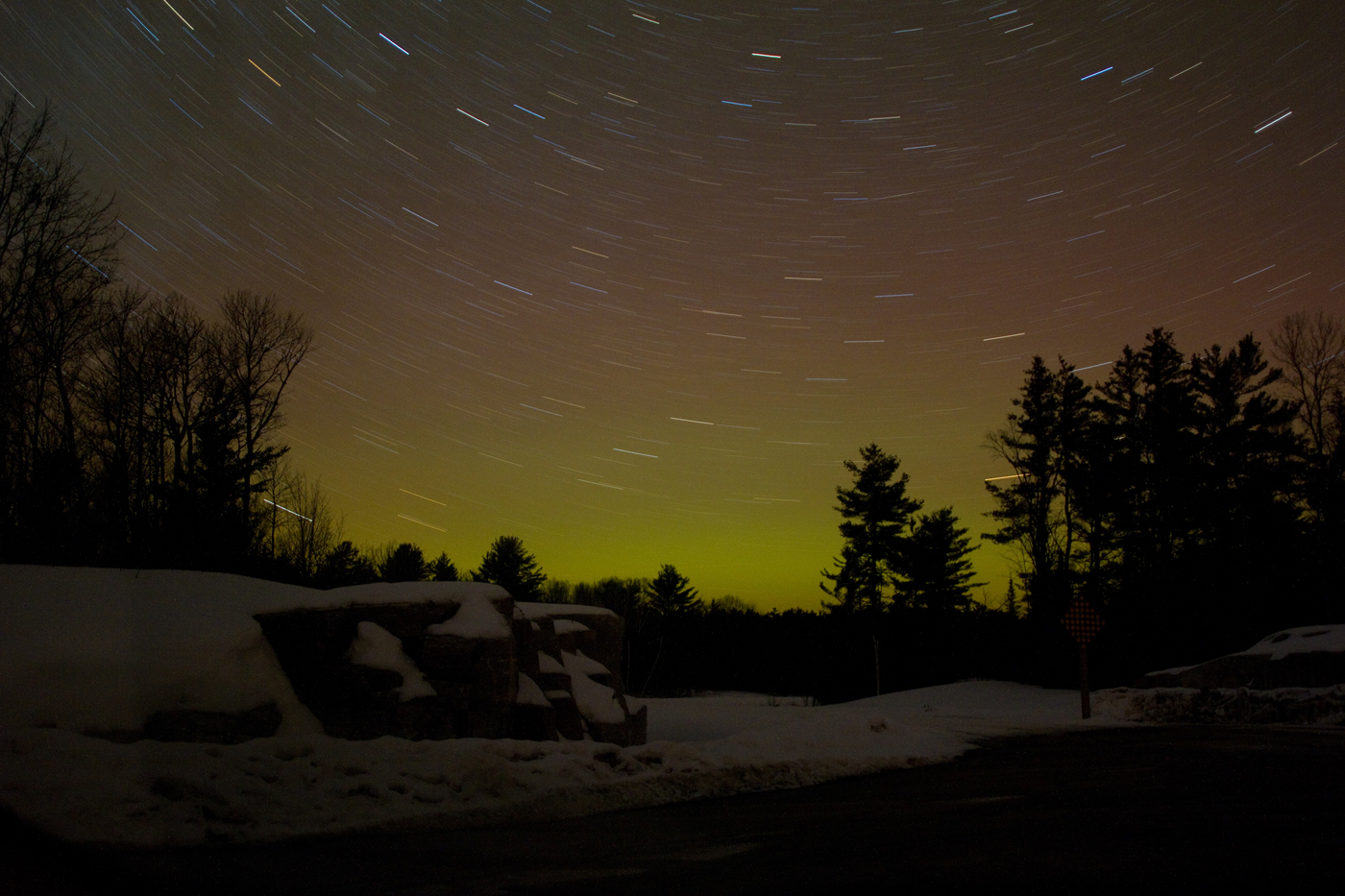
    We went northern light hunting at night without much hope of success – but then there they were. I remind myself that sometimes the shot you want happens when you least expect it. They were faint, true, and visible to the camera more than to our eyes, but they were there. This was a 15 minute long exposure.

    This was a 20 minute long exposure, and yes we were cold ;) but it was worth it. The angle of everything was so perfect, I was able to get the tilt of the stars and the northern light glow into one shot. Reason enough to stand freezing out in the middle of the night. At least for crazy people. And photographers.

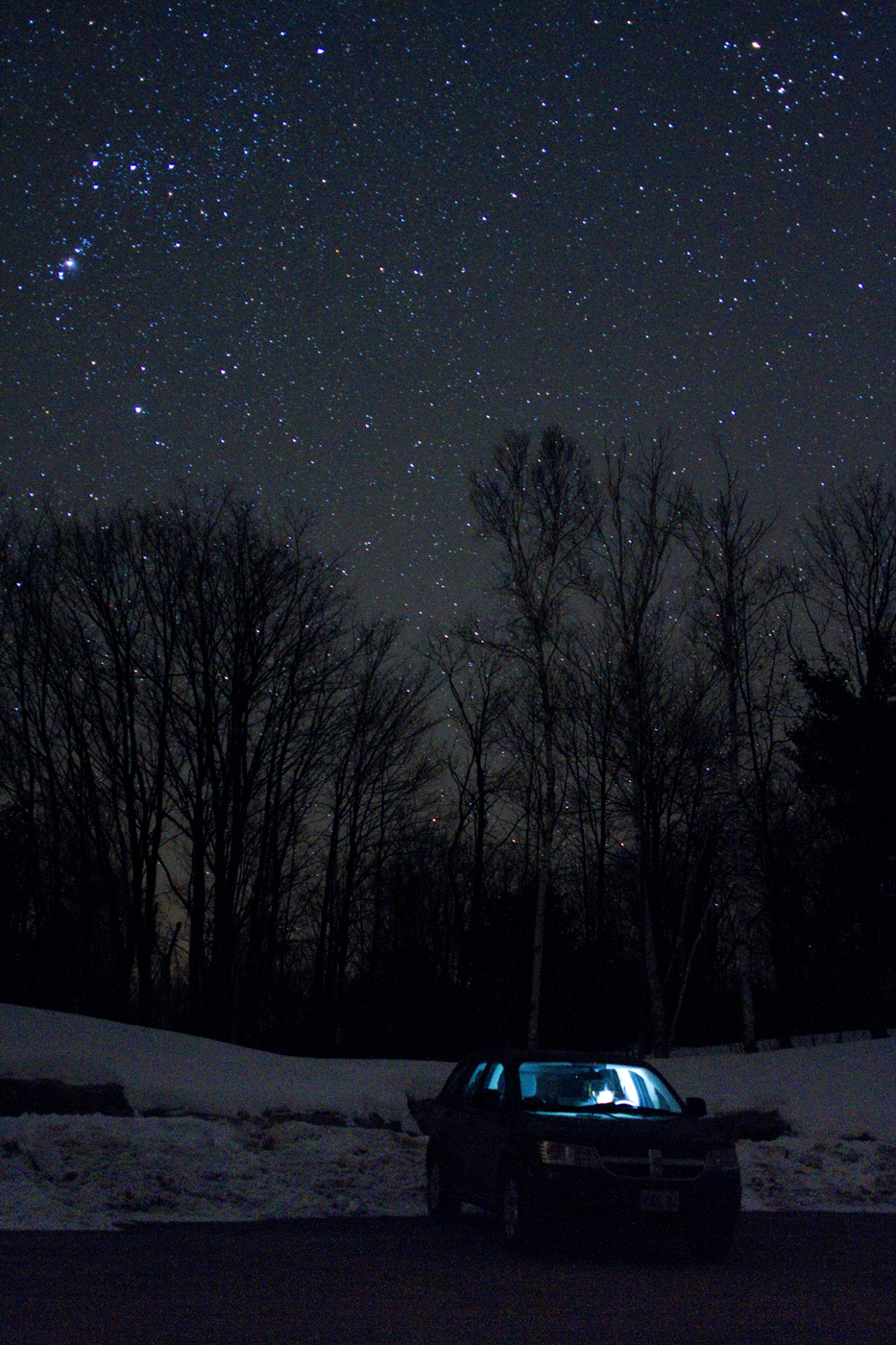
    Then we did some star photography. Did I say we? My bad, I meant I. Tito, being more practical than me, was staying warm in the car ;)

    What a perfect, clear night it was! This was all done just off the 400, north of a small town called Nobel, on a side road. The night sky was just stunning.

    Thank you Tito – for doing all the driving and getting me out of town when I really needed it :) The star photography was just the icing on a really great day !

  • Being a designer is tough because it makes you picky. I had experimented with Kool Aid a while back and, while it was fun, I didn’t keep up with it because I had so many ideas in my head and I couldn’t make the yarn match it. I think to really have the skill and control of someone like, say, Tanis, you really have to be a colour expert and dedicate lots of time and energy to it. It’s something I definitely aspire to be better at, but in the meantime Kool Aid is a fun way to get your feet wet!

    Dying yarn with Kool Aid

    So the challenge I set myself was ‘can I dye a gradient’?. The idea of dying a gradient was inspired by the Little Fair Isle Hat from the Purl Bee. They do a great job with skeins of different colours and I was intrigued by the way the lightest colour just blends into the piece. It turns out it’s very possible to dye a gradient: here’s how I did it.

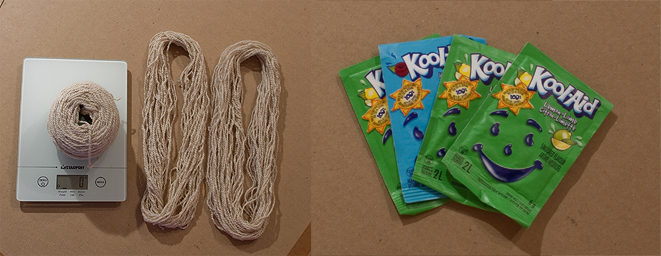
    1. Get some yarn (easy, right?) and some Kool Aid packets. I used 100% Alpaca from Alpaca Acres here in Ontario – the softest and most luxurious stuff you can imagine :) Natural fibre is important because the dye won’t take on acrylic or other synthetic yarns. For Kool Aid I used 3 packets of Lemon-Lime and one package of… Blue. I think it was called Ice Berry.Dying yarn with Kool Aid
    2. Using a kitchen scale I measured my skein into 10 gram hanks, which I retied very loosely. If you don’t have a scale you can guestimate it – just divide the yarn into 5-6 equal parts.
    3. Pour all the Kool Aid into a pot filled with water, put it on the stove and put all the yarn hanks into it. Start bringing it to a slow simmer. Set a timer for 5 minutes. dying yarn with Kool Aid
    4. After 5 minutes pull out one hank – this will be your lightest one. Set the timer for 5 minutes again. As a guideline, every 5 minutes you’ll take out one more of your mini-skeins. The result was that I had a nice gradient from ones that had been in the shortest time to my last hank – which was in for a full 40 minutes.  I say a guideline only, because you really need to do a visual check to see if enough dye has been absorbed, and adjust your time accordingly.
    5. Wash each skein gently in a mild wool wash or mild soap as it comes out, to wash away excess Kool Aid. I used Soakwash – the patron saint of all my yarn projects :)

    dying yarn with Kool Aid

    I was very happy with my results, and set about making an adult version of the Little Fair Isle Hat. I cast on the same amount, but on 4.5 mm needles and I added quite a bit of length to it, for a slouchy hat.

    dying yarn with Kool Aid

    For fun I wound all the leftover yarn together.

    dying yarn with Kool Aid

    It’s colourfast, even though I didn’t use vinegar to help set it. Apparently Kool Aid is so acidic that you don’t need it.

    dying yarn with Kool Aid

    I love the results :) Especially on the hat!

    dying yarn with Kool Aid

    Here is a great tutorial from knitty.com if you want to read more on it, and if you take a crack at dying I’d love to see photos!


  • I’ve been seeing these all over the net, I had to make one for myself :)

  • For Issue #2 I wanted to try out something a little more techy. I’ve been having to do a lot of architectural shooting lately, so this technique was on the front burner for me and I thought I’d share it :)

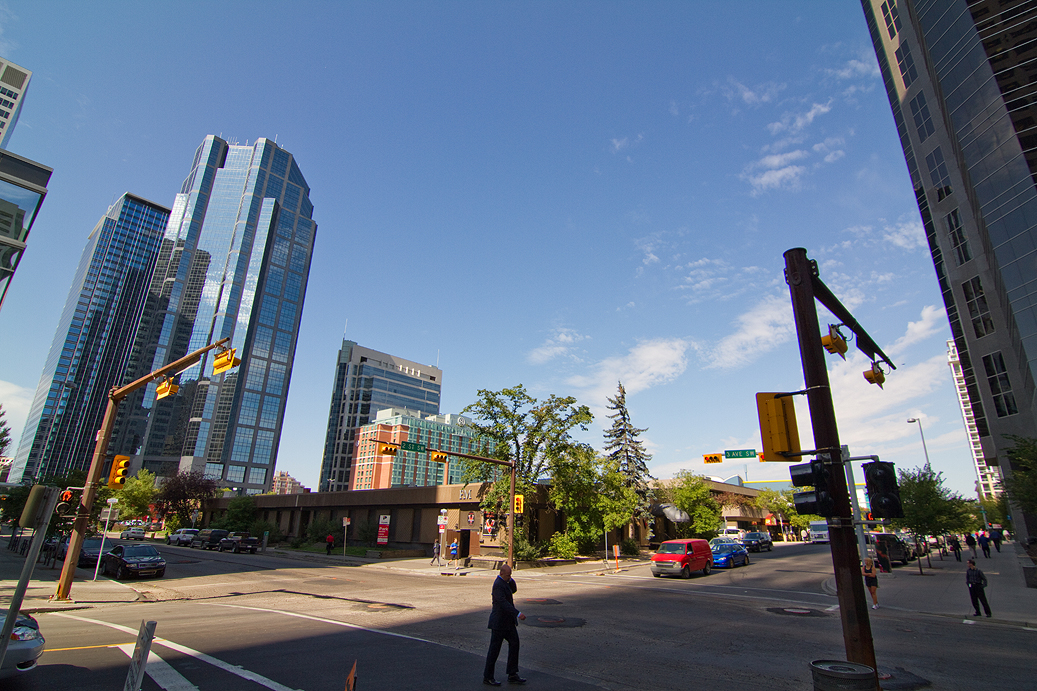
    As an architectural photographer I often find myself needing to prepare vertical panoramas for marketing purposes. Generally folks want straight lines and lots of sky to work with, so I take my 4 shots to encompass everything from the ground to the sky. Easy, right?

    The problem with a vertical panorama is that, unlike a horizontal one, sometimes the distortion can be so extreme that the algorithm Photoshop uses for PhotoMerge starts to choke and splutter like someone who’s just discovered the hard way that the milk went bad.

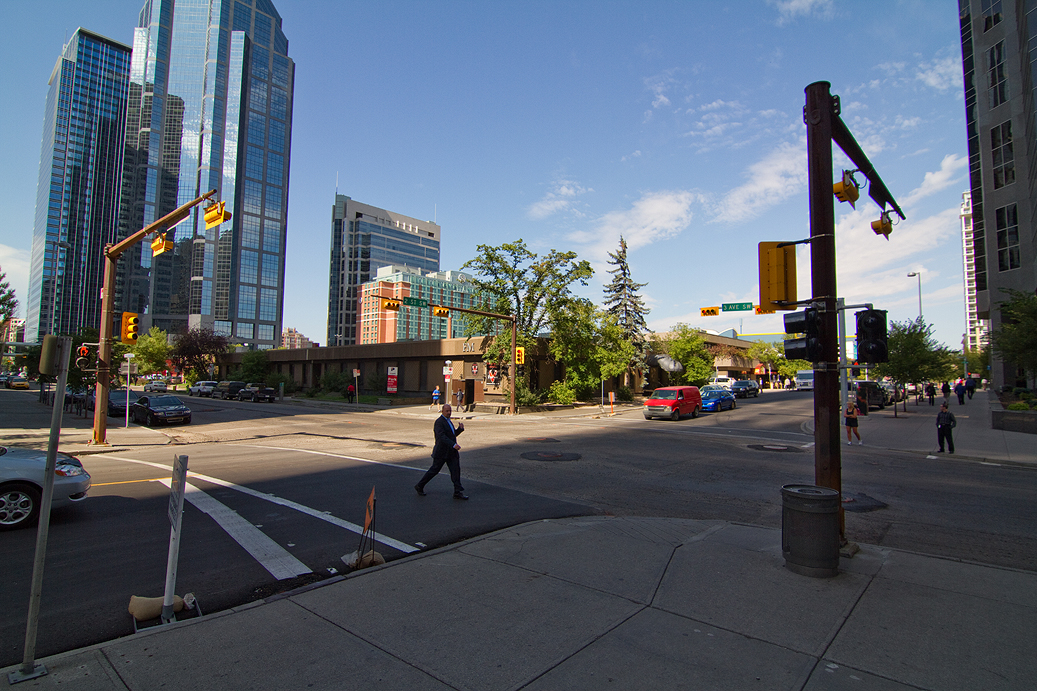
    As an example of just how lousy this can look I give you a tragic example. Behold, the working files:

    I ran these 4 through Photoshop’s PhotoMerge function, on the default settings, and this is what I got:

    Correcting a vertical panorama

    Yikes! I feel sick just looking at it. Incidentally yes, that is the French Maid, and yes I had very good reasons for taking pictures in front of it. Here is a neat little trick that will help you fix a shot like this one.

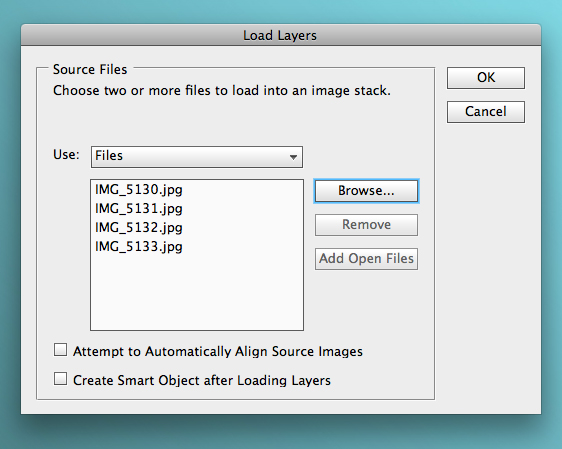
    In Photoshop, go to your file menu > Scripts > Load files into stack

    Choose your source files. This will load all of your images into separate layers on one PSD file.

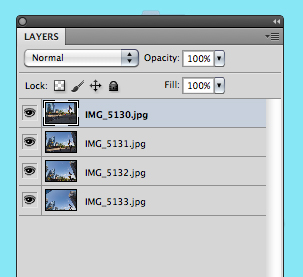
    Look at your layers palette. In my case the file on the top layer is the first shot I took – the one at ground level, where distortion is minimal.

    I want to preserve the perspective on this shot – so in my layers palette I lock that layer.

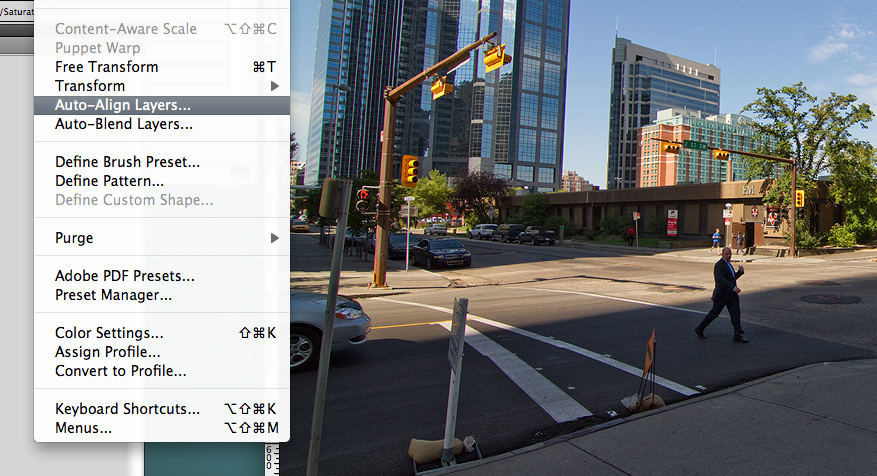
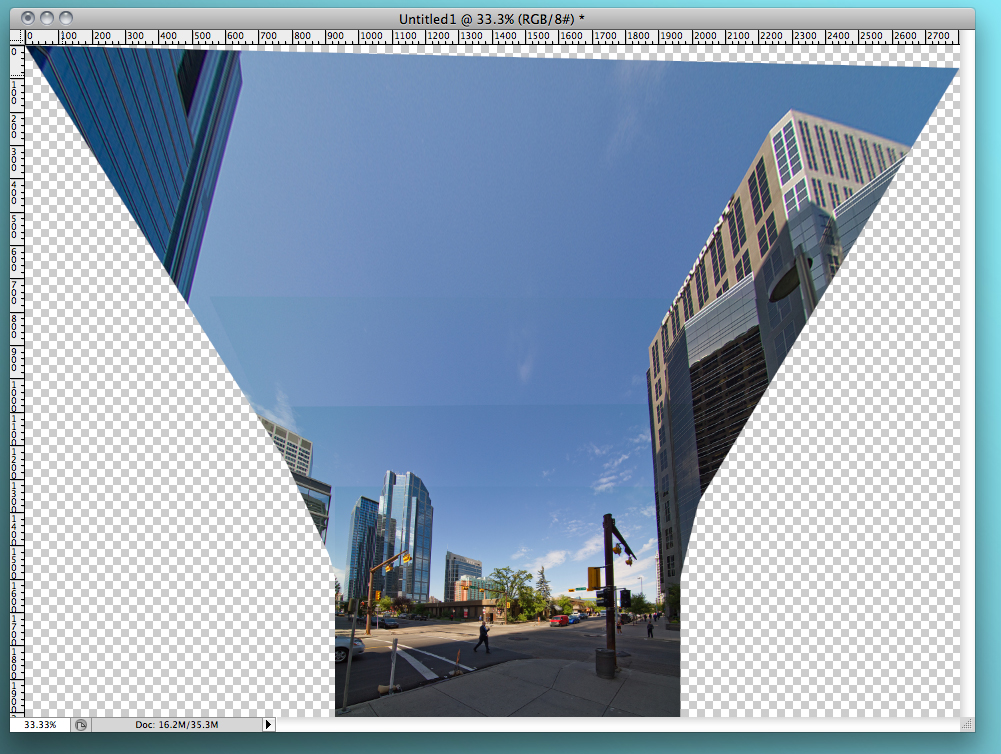
    Now I go back to my file menu Edit > Auto Align layers

    And voila! The lock forces Photoshop to respect the perspective on the ground level photo, and it collects the distortion to the top instead of the bottom. Makes me wish I had a real life ‘respect my perspective’ button ;)

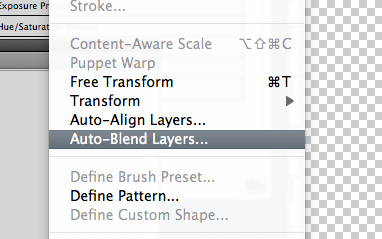
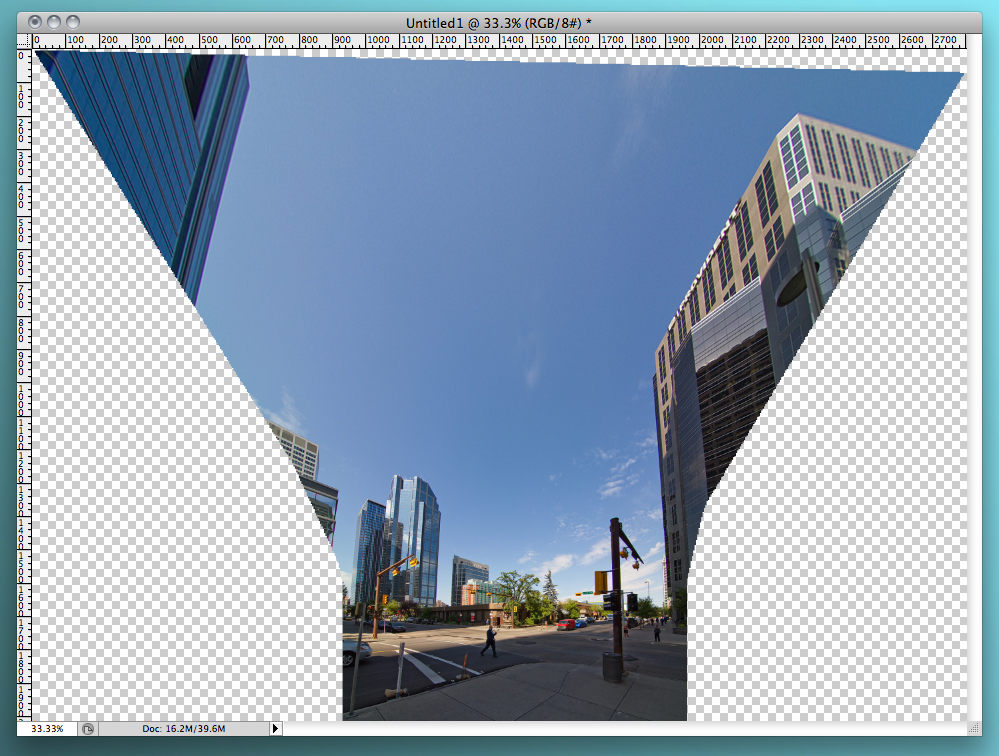
    It doesn’t look quite right, so from here you go Edit > Auto Blend layers:

    Much better…

    It still looks like a bad trip, but with a little cropping and some work with the free transform tool you’re done!

    And that’s how you prepare a file where you need to stitch shots that have a drastic perspective shift. Horizontal or vertical (it’s a more common problem with vertical) all you have to do is lock the layer that has the perspective you want to maintain and then align the layers. It’s simple and very handy :)

    Did you guys enjoy this? Was it helpful? Too techy? Are you utterly uninterested in non-craft posts? Should I feature less technique and more artsy photography? Photo-take-outter Fridays is still in it’s infancy and I’d definitely value feedback on the posts so I can provide more of what folks are looking for!