• Breaking the cold record

    So, it’s official. February 2015 was not only record-breakingly cold… it was the coldest month in Toronto in recorded history. I feel like we all deserve T-shirts to commemorate this, though it hardly seems worth celebrating. A few weekends ago it was actually minus 40, that strange zone where both Fahrenheit and Celsius will say the same thing, and you could actually watch the lake effect from my apartment.

    3V8A2634

    That stuff that looks like steam rising upwards? That’s snow, coming downwards over Rochester. Crazy, right?

    But of course, if you are a photographer then this is a completely different deal. Last weekend Tito and I drove out to Niagara Falls in the morning (the emptiest I’ve ever seen it) and shot the incredible ice and snow formations that now lie at the bottom of the the waterfall with the highest flow rate in the world. Because, despite that volume, it was frozen.

    3V8A2939 3V8A2942_DxO 3V8A3016_DxO 3V8A3029_DxO 3V8A3054_DxO 3V8A2971 3V8A3053_DxO

    Both sides looked extraordinary, but I especially enjoyed the American side which had these giant ice boulders at the bottom. I also love that sculpted ice structure at the bottom of the horseshoe falls, looks like another world!

  • How to work lace on the wrong side of your knitting

    3V8A2702

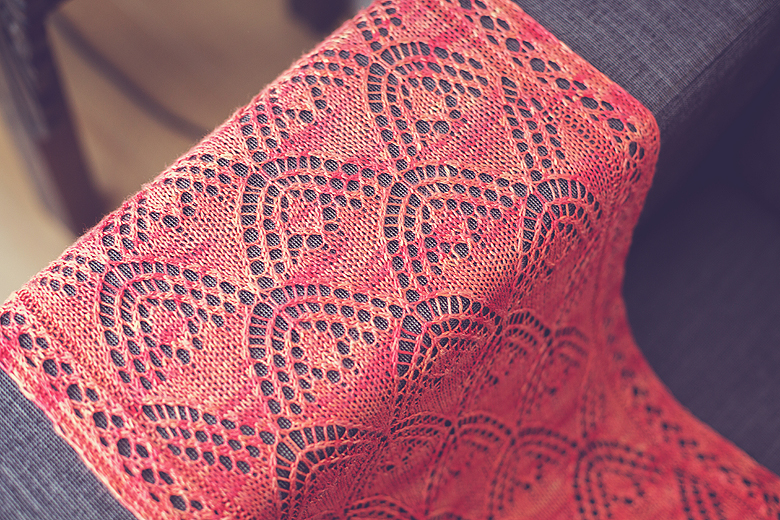
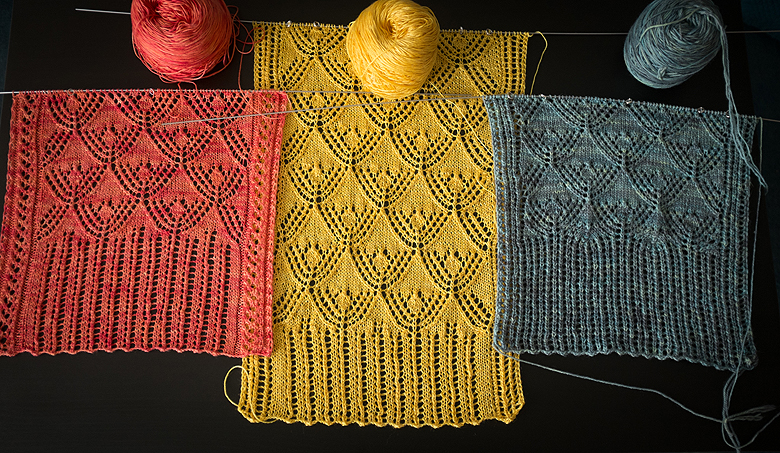
    In my latest design, ’Sandy’ the lace pattern is worked on both sides of the piece. This can sound intimidating, but working lace on the purl side is really quite easy, promise :) I shot photo tutorials for the pattern to help folks navigate the lace.

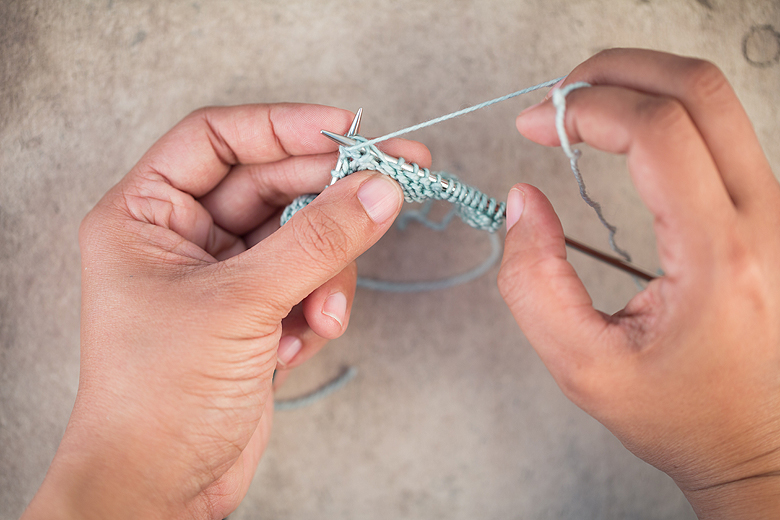
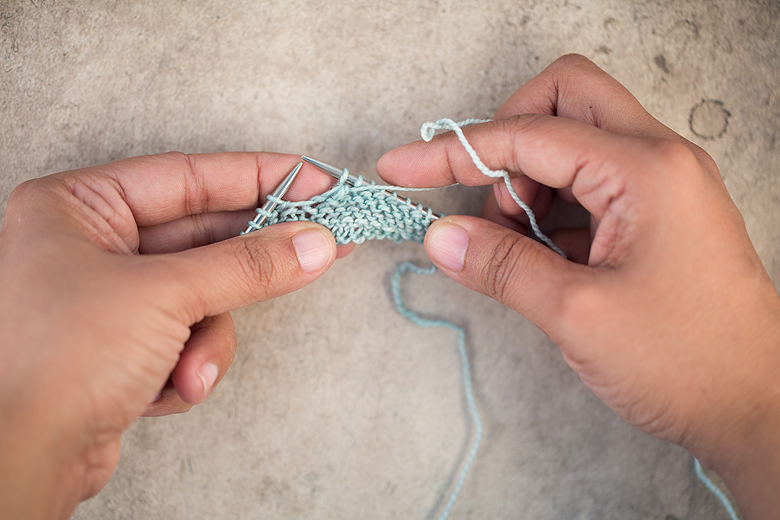
    On the front of ‘Sandy’ I use yarn overs (yo) left-leaning decreases (ssk) and right-leaning decreases (k2tog) on the right side. On the purl side, yo becomes ‘yarn around the needle’, the left-leaning decrease is a ‘slip, slip, purl’ (ssp), and the right-leaning decrease is a ‘purl 2 together’ (p2tog). Grab some needles and follow along, it will open up a whole new world in lace patterns!

    tutorial-blank

    Purl 2 together (right leaning, wrong side decrease)
    1. Insert the right-hand needle as if to purl, making sure you go through 2 stitches, as you would for a knit 2 together

    3V8A3480

    2. Wrap the working yarn as if to purl

    3V8A3481

    3. Slide both stitches off

    3V8A3482

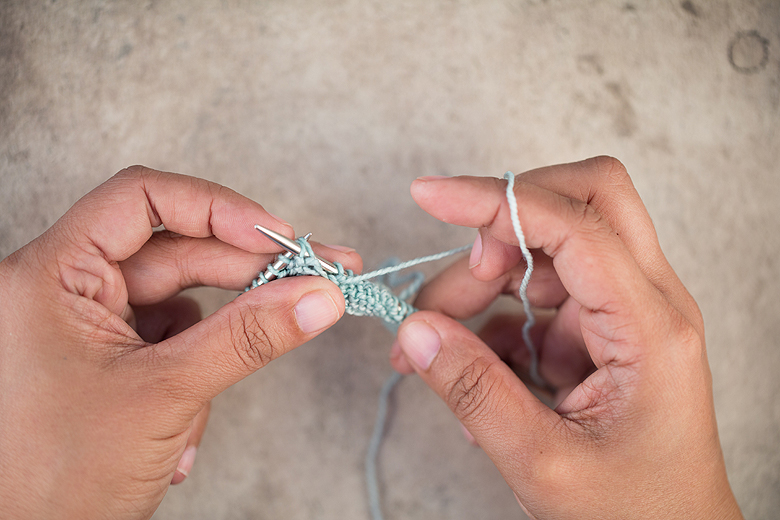
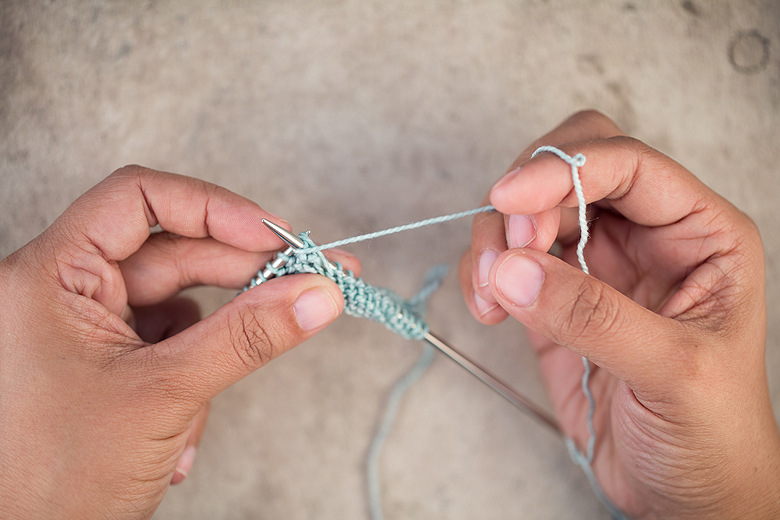
    Yarn around needle (wrong side increase)
    1. On the right side you would normally bring the yarn forward, but it’s already forward! What to do?

    3V8A3483

    2. Wrap the working yarn around the right hand needle, counter-clockwise

    3V8A3484

    3. When you work the next stitch you will see the yo increase. Easy!

    3V8A3485

    (This yarn over works on the wrong side of the work, or anytime you find yourself performing a yarn over between 2 purl stitches on the right side. )

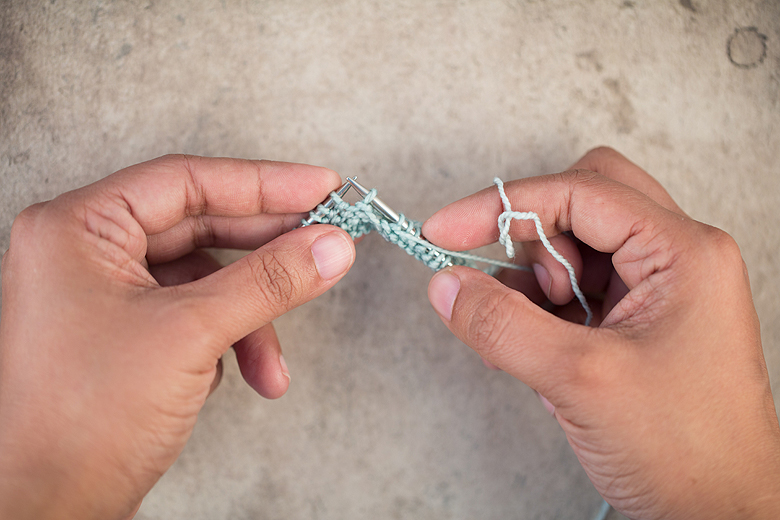
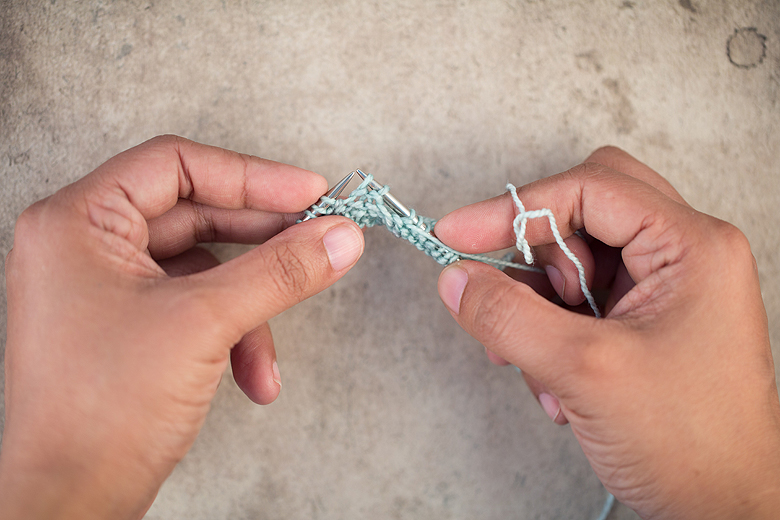
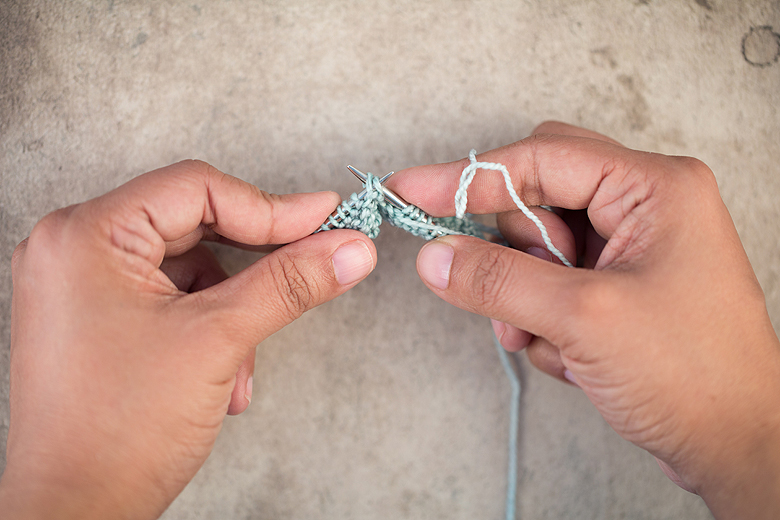
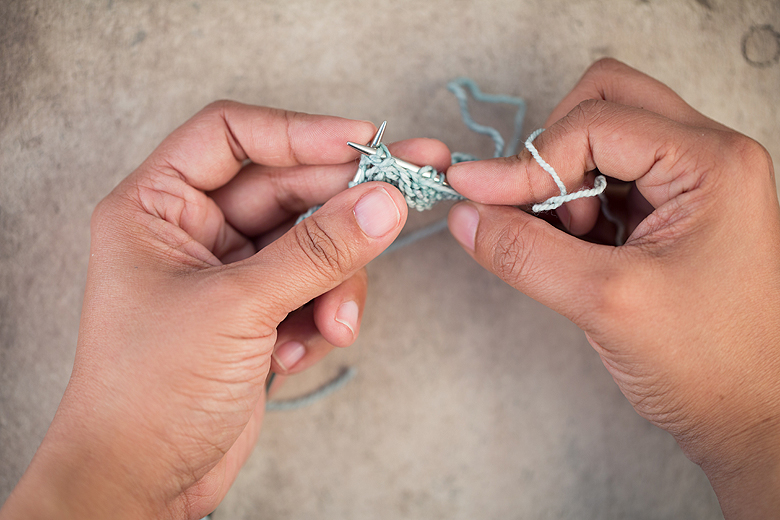
    Slip Slip Purl (left leaning, wrong side decrease)
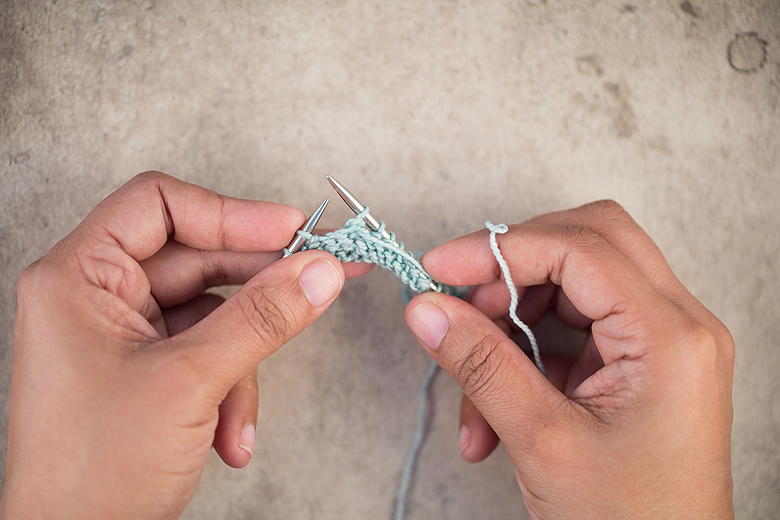
    1. Slip one stitch as if to knit

    3V8A3487

    2. Slip another stitch as if to knit

    3V8A3491

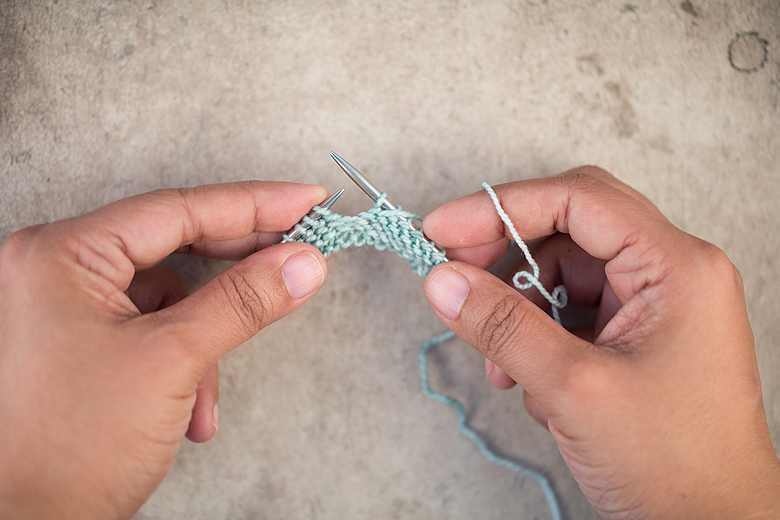
    3. Return these stitches to the left needle in their new, twisted orientation

    3V8A3492

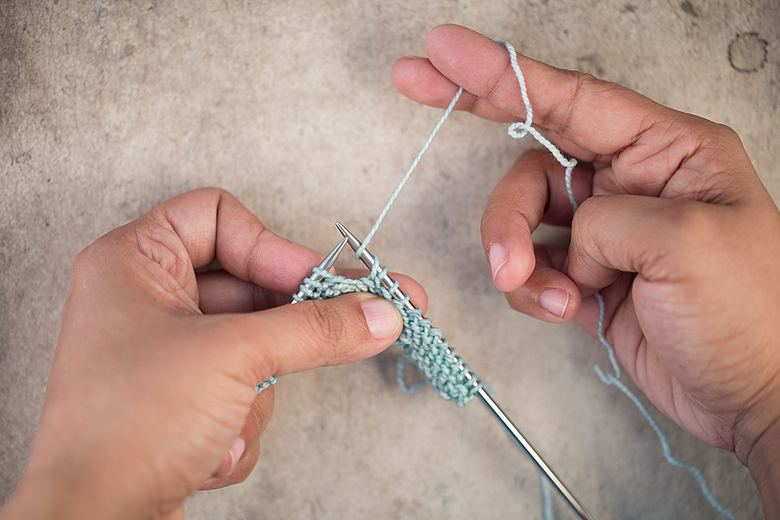
    4. This is the only tricky bit, reach around to the back and Insert your right hand needle into the back loops as if to purl

    3V8A3493

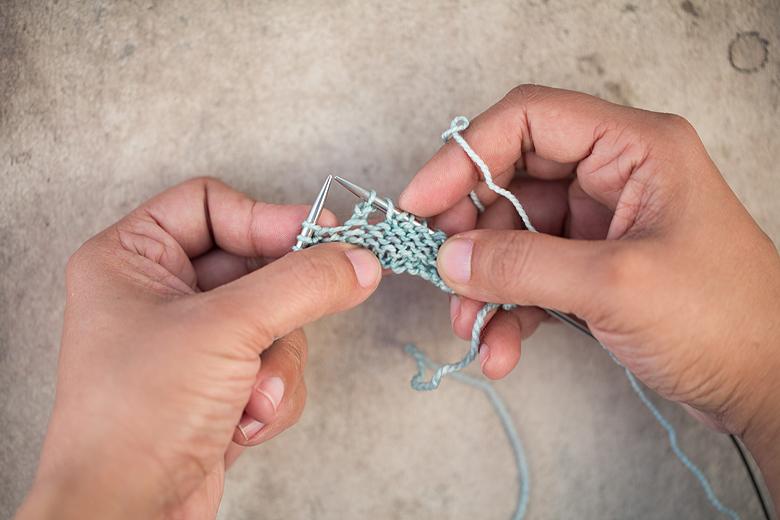
    5. Wrap the working yarn as if to purl

    3V8A3494

    6. Slide both stitches off

    3V8A3495

    Wrong side patterning is used on only 4 rows of the 28-row repeat, but it really adds a lovely touch to the lace, and it’s a handy thing to know!

    3V8A2703

  • Resin Jewelry Book Review and Giveaway!

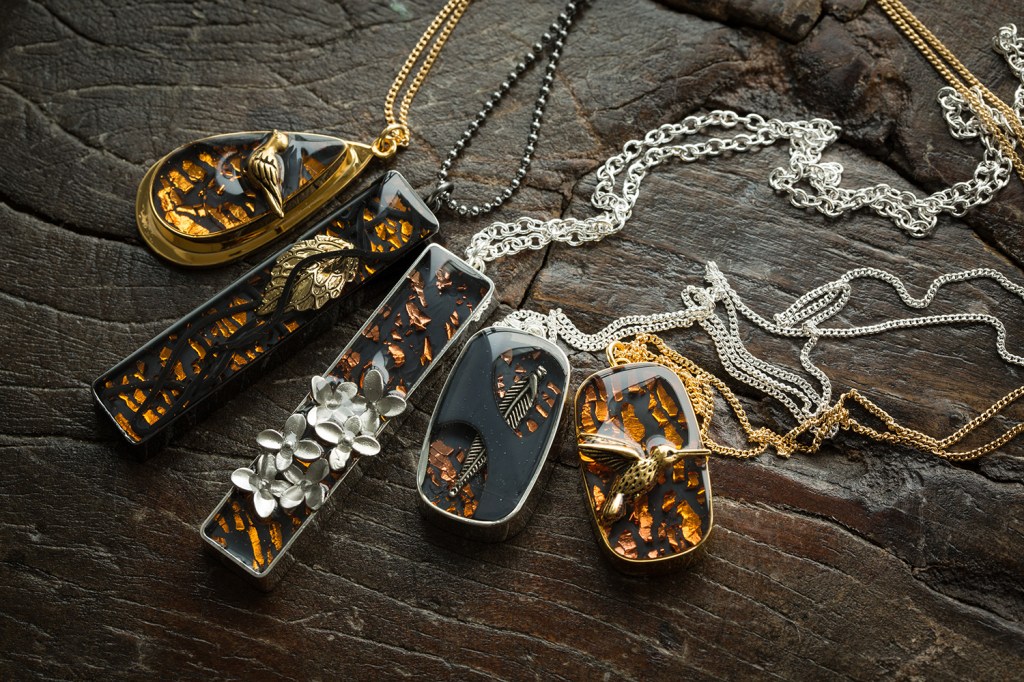
    BeadingGem.com has posted an awesome review of my book, Resin Jewelry, and is also hosting a giveaway for a free copy of the e-book. Her review made my crafty little heart sing, check it out here! While you’re there, leave a comment for a chance to win a free copy :)

    If you want to learn more, or to purchase a copy of your own (including print option!) check out my Resin Jewelry Page!

    promo2

  • Celebrating with Sandy

    3V8A2660-2

    Happy March 1st!

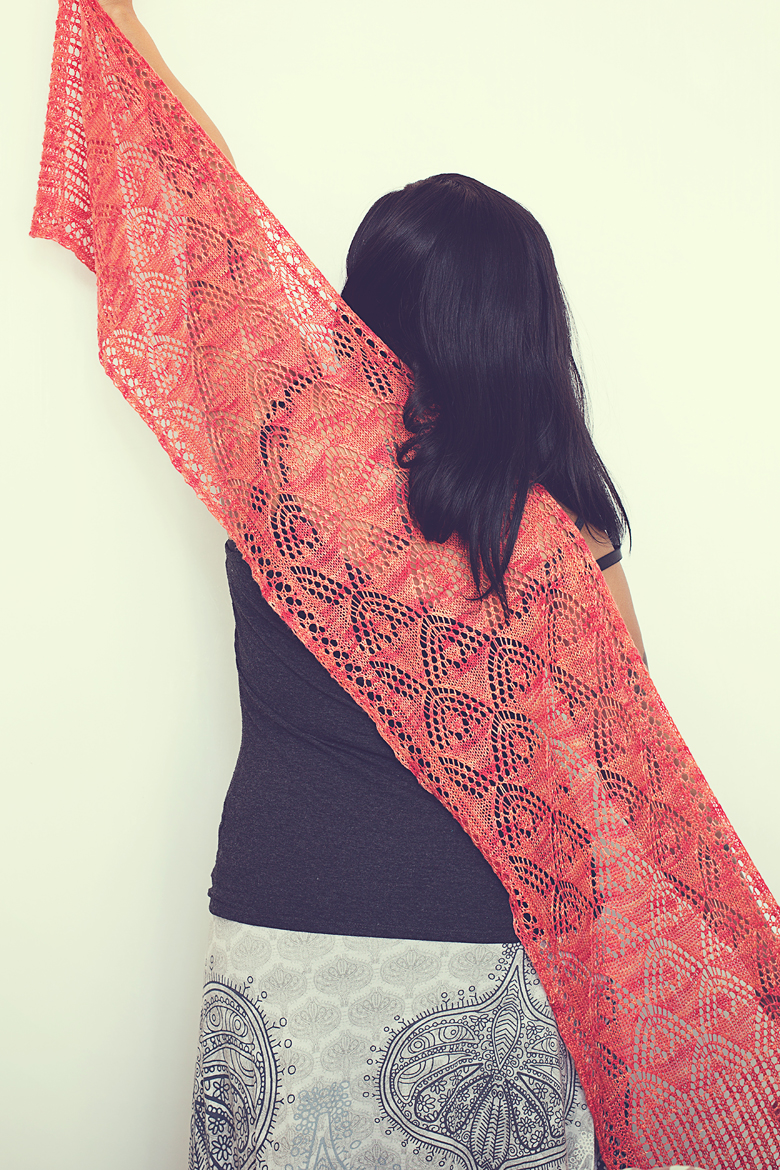
    To celebrate the beginning of the month that, sooner or later, heralds the end of winter, I am happy to announce that ‘Sandy is finally ready for release!

    Buy on Ravelry  |  Buy on Etsy  |  Buy on Craftsy

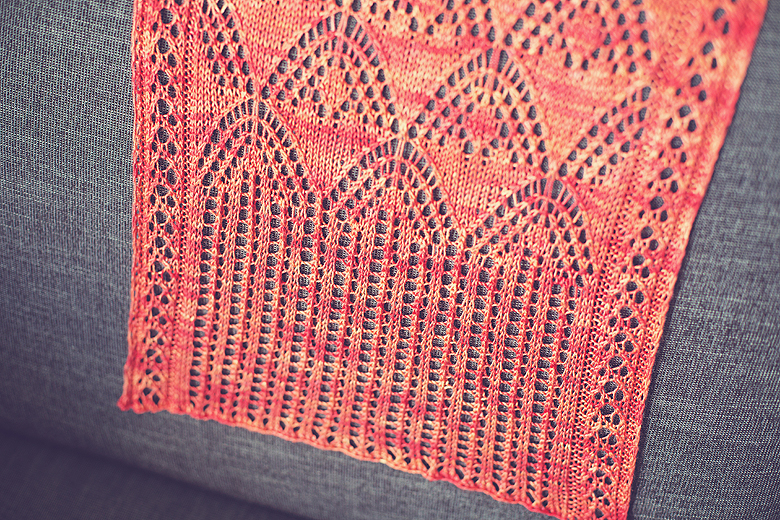
    For months you guys have seen sneak peeks of my latest lace piece. Tons of test knits and tiny adjustments have resulted in a shawl that I am truly proud of. The base is Tanis Fiber Arts Silver Lable Mulberry Silk in the gloriously summery ‘Papaya‘.

    DSCF0010

    Here’s the official blurb =D

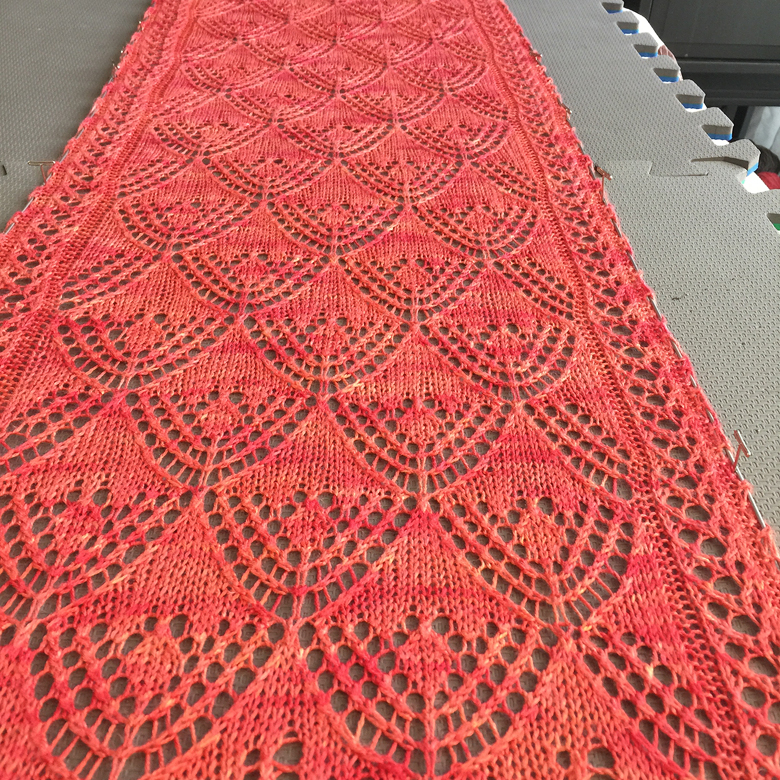
    Sandy is named after my mom, because my mom loves bright, tropical colours, and silky, luxurious textures. This feminine shawl is light-as-air openwork, worked all in one piece from end to end.

    3V8A2661-2

    Sandy is given in charted form only. The ability to read your knitting will be very helpful, as there is patterning on both sides (don’t be intimidated, it’s only 4 rows out of the 28-row repeat). On pages 7 & 8 you will find photo tutorials on how to increase and decrease on the wrong side of your knitting.

    3V8A2702

    Tanis Fiber Arts Silver Label Mulberry Silk is the perfect yarn for Sandy, giving you a piece that is both delicate and luxurious with incredible drape, but can totally be thrown on over jeans or a sundress to keep the sun off your shoulders.

    3V8A2690-copy

    The 500 yard skein results in a generously sized piece at 62” x 12.5”. Instructions are given for adjusting the size of the piece on page 2.

    3V8A2703

    I have written up and shot photo tutorials for the wrong side increases and decreases, which I will release to the blog in the near future as well. I truly hope you enjoy this piece, and if you start soon, you’ll have something beautiful to drape over your shoulders when the sun returns!

  • Off the needles!

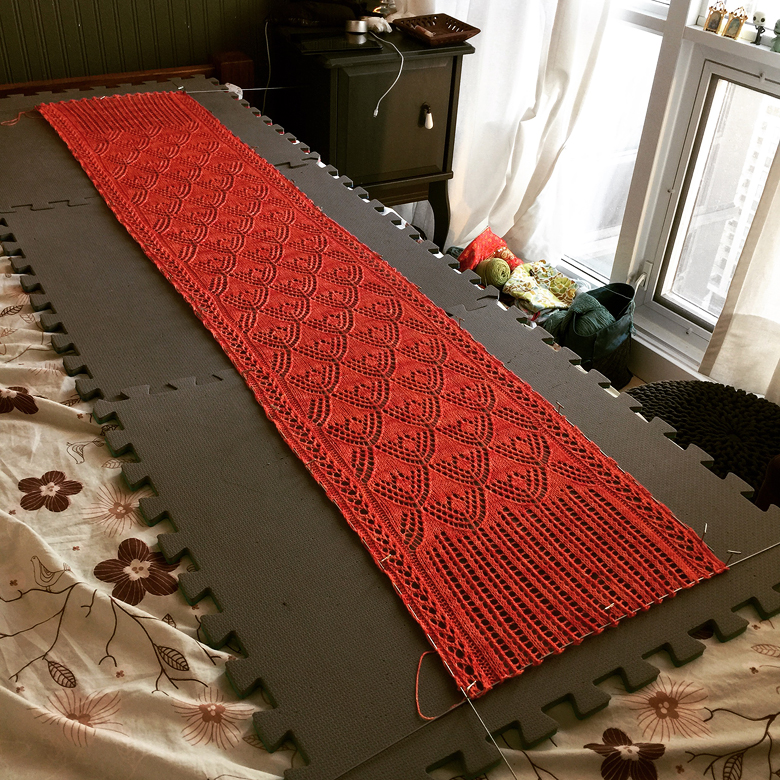
    Proper FO shots, (and the pattern!) for Sandy are coming shorty, but I had to show off the final, blocked piece. It blocked out to a delightful 62″ x 12.5″ with about 5g (<23 yards) of yarn left over. I can’t wait to get it off the blocking wires for a shoot!

    IMG_8900 IMG_8904

  • Review at beadinggem.com!

    Thank you Pearl for the awesome review on Beadinggem.com! Click here to check it out =D
    Thank you also to Aims for talking me up, you’re the best!

    3V8A2160

  • The Zen of Hem(stitching)

    tutorial-blank

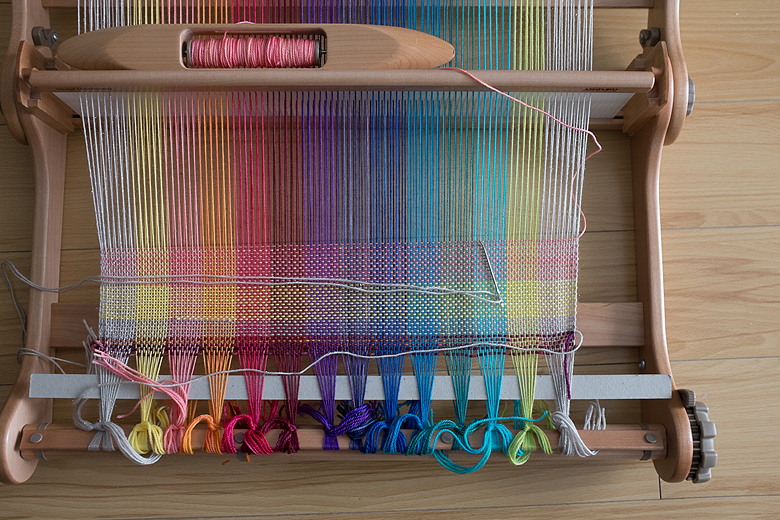
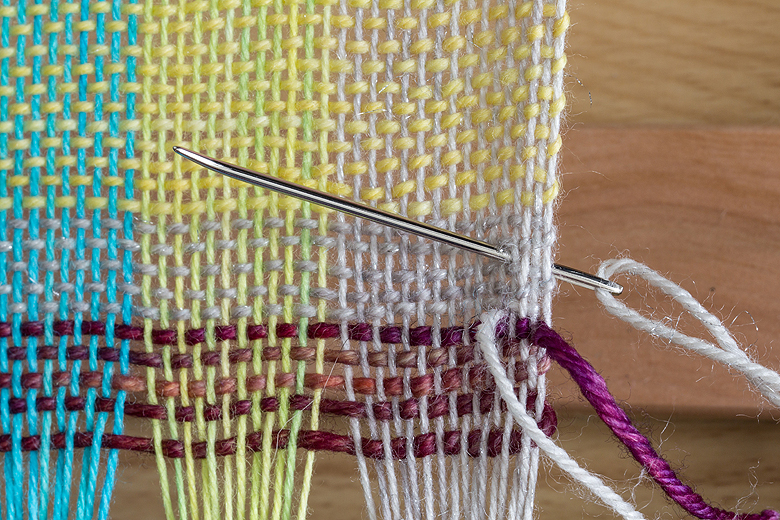
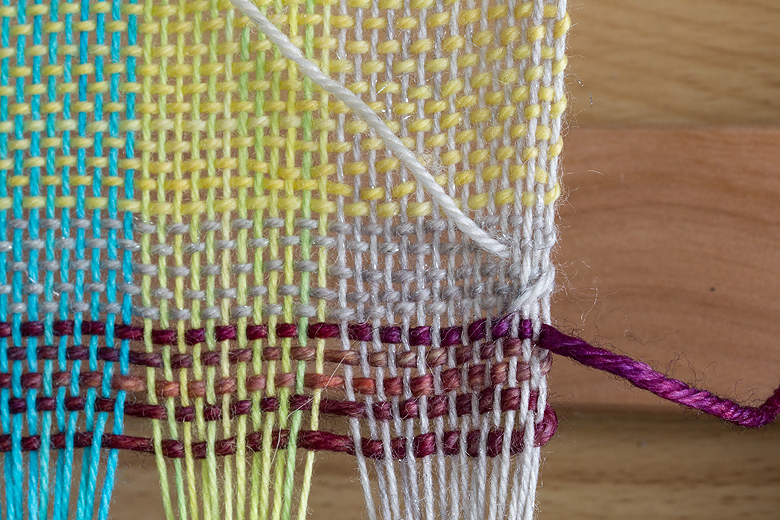
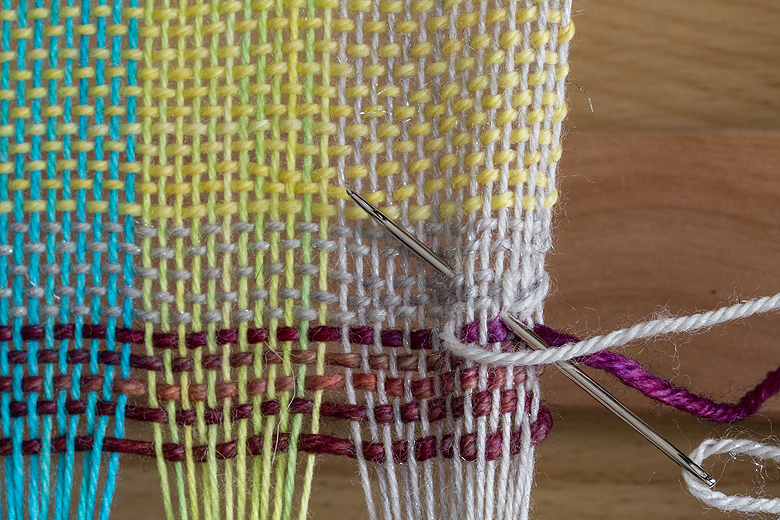
    A few people asked, after my post about the Colour Shifting Scarf, if I could share a tutorial on how I hemstitch my ends. I am by no means a weaving pro, so how I do it may not even be the ‘right’ way, but it works for me and I love how it looks!

    IMG_8808

    1. When you have finished weaving your leader, and you’re ready to start with your first colour, pull off a length of yarn that’s at least 4 times the width of your piece.

    1

    2. Weave your first colour, leaving that extra yarn to the side for now.

    2

    3. Work a few inches of weaving to stabilize your fabric, then go back and thread a blunt tapestry needle with the extra yarn.  It sounds silly to point this out, but it’s a mistake I’ve made; don’t advance your fabric until after you’ve hemstitched!

    3

    4. Decide how you want to divide up your warp strands. This number is arbitrary and completely up to you and the effect you’re going for. In my case, I knew there were 16 beige strands, and 12 of every other colour, so I decided to do groups of 4 for the beige and 3 for everything else.

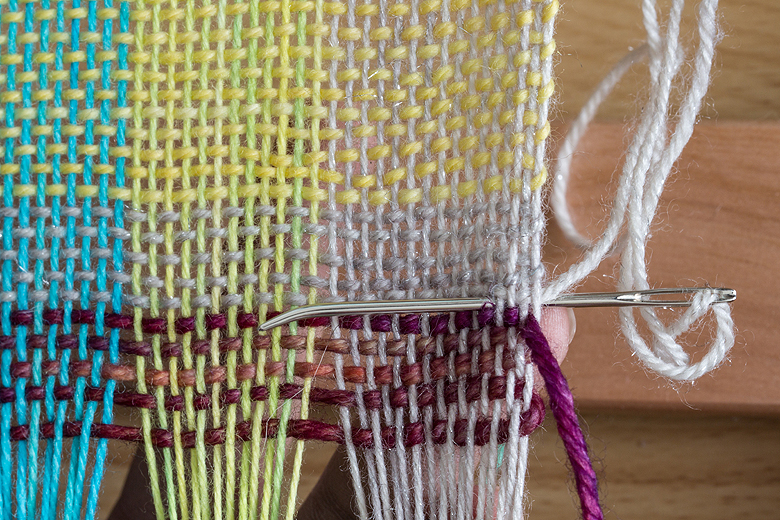
    5. Go under your chosen number of warp threads, in my case 4.

    4

    6. Go around your warp threads, wrapping them.

    5

    7. Go through the fabric – bring the needle up 4 warp threads over, and 3 weft picks up. Again, these are my numbers, but they are a good place to start.

    6

    Pull your thread snug.

    7

    My hemstitching mantra looks like this:
    Under. Around. Through.

    8. Under

    8

    9. Around, and through.

    9

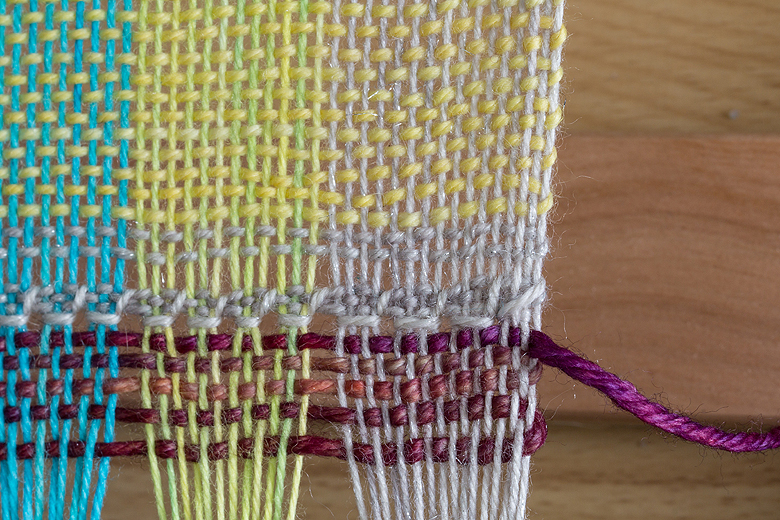
    10. After a bit you will see a pattern. See that gap that’s forming above the hemstitch line? Don’t sweat that gap, it will totally block out when the fabric is washed. Some techniques actually use that gap to create intentional lace, but in our case it’s so small that when the yarn expands and relaxes, it will disappear. 10

    Work your way across the piece, when you reach your last gap pull your working thread through the knot a few times to fasten it, and you’re done!

    Hemstitching at the other end of your piece can seem weird because it’s reversed, but just remember your mantra; go under some warp threads, around to wrap them, and then through the fabric :)

  • Ye Olde Day Job

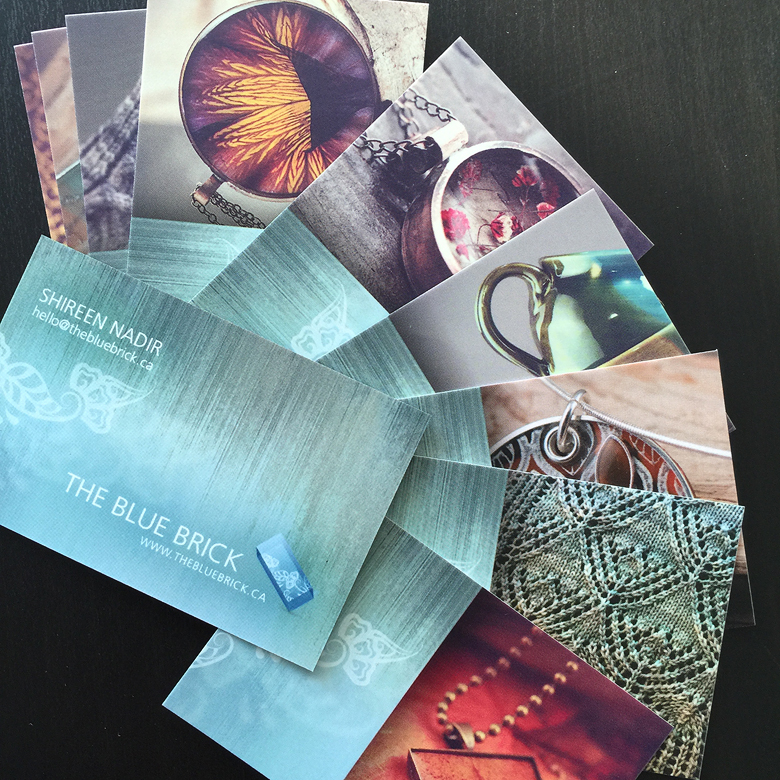
    … is occupying my every waking moment. Definitely heading into a crunch time, and it’s hard to find time to craft. In honour of huge workloads, I’ve ordered new business cards for my own company, The Blue Brick :) They just arrived!

    IMG_8780

  • TFA Tuesdays!

    My colour shifting scarf has been featured on Tanis’ blog today, check it out!

    DSCF0088 DSCF0085 DSCF0083 DSCF0091

  • Tutorial – The Colour Shifting Scarf

    DSCF0085

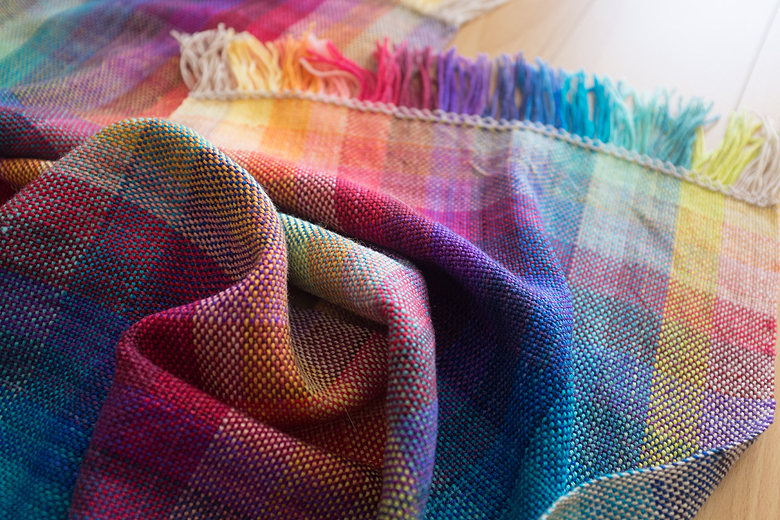
    This winter has been super cold, grey and monochromatic. So when Tanis Fiber Arts came out with mini-sock yarn skeins I was inspired to weave a colourful rainbow scarf, to give myself a cheerful pop of colour on these grey days. Changing colours as often as I did can be a bit fiddly, but oh-my the results are worth it, this is the perfect grey day scarf!

    DSCF0070

    In Newfoundland they say ‘There is no such thing as bad weather. There is only inappropriate clothing’. Well, it’s -40 out there today, that strange, cold place where celsius and fahrenheit say the same thing. I think that the spirit as well as the body needs to be armed against weather like this, and this scarf is the answer. tutorial-blank

    You will need:

    • 2 packs of Tanis Fiber Arts Mini Sock Yarn Skeins
    • Optional: approximately 120 yards in a neutral colour (I’m using Koigu KPM, colour 2360)
    • A rigid heddle loom (I am using the Ashford 24” knitters loom)
    • A 12-dent heddle (Better for sock weight, but work with what you’ve got)
    • A boat shuttle with extra bobbins*
    • Tapestry needle
    • Scissors

    *Most looms come with stick shuttles, but because you’ll be changing colours frequently, a boat shuttle with enough extra bobbins to give you one bobbin per colour is much easier. Also, a boat shuttle gives you a smoother pass through the shed, and because the bobbin spins freely it doesn’t do that awful snag thing when you’ve passed your stick shuttle though without a long enough length of yarn. If you enjoy weaving, it’s a worthwhile investment.

    **//EDIT//**

    I made another one of these later on, and I made a few tweaks that really improved the design. I used a 10-dent heddle instead of 12 which greatly improved the drape and allowed me to warp to 80”, which meant that after I cut off the loom waste Tanis was left with a more generous sized scarf at 65” long and about 15” wide. Because I had fewer dents to work with, I warped 6 threads of each colour instead of 7, and when weaving I wove 12 picks of each colour instead of 14. She loved it :)

    Click here for the hemstitching tutorial I wrote while weaving this scarf.

    DSCF0062

    1. Open up the packs of yarn. Enjoy how ridiculously happy it makes you.

    DSCF0023

    2. Wind up the yarn into little balls and work out the order that you’d like your colours to appear in the warp. I went for something close to a natural spectrum. You will use one ball of each colour for your warp, and one ball of each colour for the weft, so keep the 2 sets separated.

    DSCF0032

    3. Do some math. You can change this to suite your preferences, but mine looked like this:

    • Intended scarf length: 60 inches
    • Intended scarf width: 15 inches
    • Estimated loom waste: 18 inches
    • Total warp length: 78”

    Because a warp is under tension, pieces often seem shorter than you’re expecting when they get cut off. To account for this, I gave myself a buffer of 7”, increasing my total distance between the back apron rod of the loom and the warping peg to 85”.

    Each mini skein is approximately 34 yards. With an 85” warp, this should let you fill about 7 slots of the heddle with each colour (remember, that means 14 warp ends per colour).

    4. I chose to frame my scarf with a neutral colour, which has the added benefit of making it wider. This is optional, but if you choose to do the same thing then begin warping your loom with the neutral colour. I warped 8 threads of the neutral, and then proceeded to the first colour in my rainbow. Work your way across the loom, warping the colours in the order you set out in step 2, filling 7 slots with each colour.

    DSCF0038

    5. Now grab the other set of yarn cakes. Pre-wind your bobbins, one with each colour.

    DSCF0047

    6. Begin weaving. After you weave the leader, weave a few picks with the neutral colour and leave a tail at least 4 times the width of your piece. (You will use this to hemstitch the piece after weaving a few inches. This is my favourite hemstitching tutorial).  Starting with the first colour in your rainbow, weave 14 picks. Using the visual guide below, change to the next colour, staying in the order you set out in step 2.

    DSCF0049

    Tip: Changing colours:changing-colours

    7. When you get to your last colour, simply start again with the first colour. Continue weaving to the end of your warp. End by weaving a few picks of the neutral colour and hemstitching. On my scarf, this meant 3 full repeats of my 12-colour rainbow, and a little less than half of a 4th repeat before I ran out of warp.

    DSCF0064

    8. Cut the scarf off your loom, wet-block, trim your fringe and buffer both body and soul against Old Man Winter!

    DSCF0083 DSCF0088 DSCF0079 DSCF0070